5 B2C & B2B SaaS SEO Case Studies From Projects We’ve Worked On

Ashot Nanayan
SEO Strategist
Table of content
I’ve been meaning to sit down and share my SaaS SEO experiences for a long time, but like most of us, I’ve always had too much on my plate. Between client work, new projects, and the constant whirlwind of testing and learning, I rarely get the chance to pause and put everything into words.
This weekend, I finally decided to block out the noise and dedicate time to something I’ve wanted to do for ages: document the real stories, the wins, the struggles, and the lessons that shaped our SaaS SEO journey.
What follows are 5 SaaS SEO case studies taken straight from my own campaigns. If you’re looking to achieve similar results for your own SaaS, you can always reach out to our B2B SaaS SEO agency.
Ready to grow smarter?
Book a free 30-minute strategy call with our team. We'll audit your search visibility and build a custom action plan.
SaaS SEO Case Study #1: Driving Organic Growth for a B2B SaaS
A while back, our specialized B2B SEO agency worked with a large B2B SaaS company that was already well respected in its space and trusted by some major global names.
They had the reputation and the client base, but their presence wasn’t as strong as it should have been. Despite being an authority in their industry, they weren’t appearing where their buyers were searching.
The company wanted to strengthen its brand visibility and significantly increase its organic traffic. Their goal was simple but ambitious: to secure top positions in search results for competitive, industry-specific keywords, everything from workplace management to employee recognition software.
The long-term goal was to cement themselves as the go-to leader in their industry.
Challenge
One of the biggest challenges in this project was the level of competition around the core keywords.
For example, terms like employee recognition software came with a keyword difficulty of over 80, meaning we were up against some of the toughest competitors in the industry.
That’s why it wasn’t realistic to rely only on head terms. Instead, we had to build out a strong library of long-tail content and develop topical authority step by step.
Behind the Results
Our team understands that B2B SEO necessitates a distinct approach from a typical B2C project. In B2B, the content must reach decision-makers and individuals who are less concerned with generic messaging and more interested in B2B SEO ROI, scalability, and how a solution aligns with their business objectives.
So, we stepped in, reviewed the full picture, and built an SEO strategy around what they wanted to achieve.
Drawing on my experience as a B2B SEO agency partner and the same principles I often share in my guides, we developed a plan that spoke directly to the audience.
How We Build a 300-Piece Content Strategy for a B2B SaaS Brand
A structured SEO content plan built around product demand, buyer intent, topical authority, and long-term pipeline growth.
Map the Product, ICP & Use Cases
We start by understanding the SaaS product, target buyers, industries, pain points, features, integrations, competitors, and the problems people are trying to solve.
Product-led search angles identifiedBuild the Keyword Universe
We collect keywords across BOFU, MOFU, TOFU, alternatives, comparisons, integrations, templates, jobs-to-be-done, use cases, industries, and pain-point searches.
Full topic universe collectedGroup Topics by Funnel Stage
We separate the 300 topics by intent so the strategy includes revenue pages, decision-stage content, educational guides, linkable assets, and support content.
Topics organized by buyer journeyPrioritize the First 100 Pages
We don’t publish randomly. We prioritize the topics with the strongest mix of buyer intent, ranking potential, product fit, competition level, and business value.
First publishing batch selectedCreate Briefs, Internal Links & Page Types
Each topic gets a clear page type, outline, angle, CTA, internal link path, target keyword, secondary keywords, and role inside the wider content system.
Content briefs and structure preparedBuild the Publishing Roadmap
We turn the full strategy into a realistic content calendar, usually split by month, funnel stage, page type, and priority level.
300-piece roadmap ready to executeThen, we focused on building topical authority. Over the course of a year, we published more than 300 blog posts.
Every piece of content was reviewed internally before going live, making sure it met Google’s E-E-A-T standards and aligned with our long-term SEO goals.
From there, our SaaS link-building agency started running aggressive link-building campaigns. We concentrated on securing high-quality links to MOFU and TOFU blog posts and then strengthened internal linking to support commercial pages.
Our off-page SEO strategy
- Linkable assets creation
- SaaS link-building
- HARO link-building
- Relevant and high-authority links
- No spammy tactics
- No PBNs or link farms
The Results
The results were significant. Starting from over 80k organic visitors, the blog grew to over 250,000 organic visits. The traffic came directly from the content strategy we built; blog posts that spoke to the right people and positioned the company as an authority in their space.
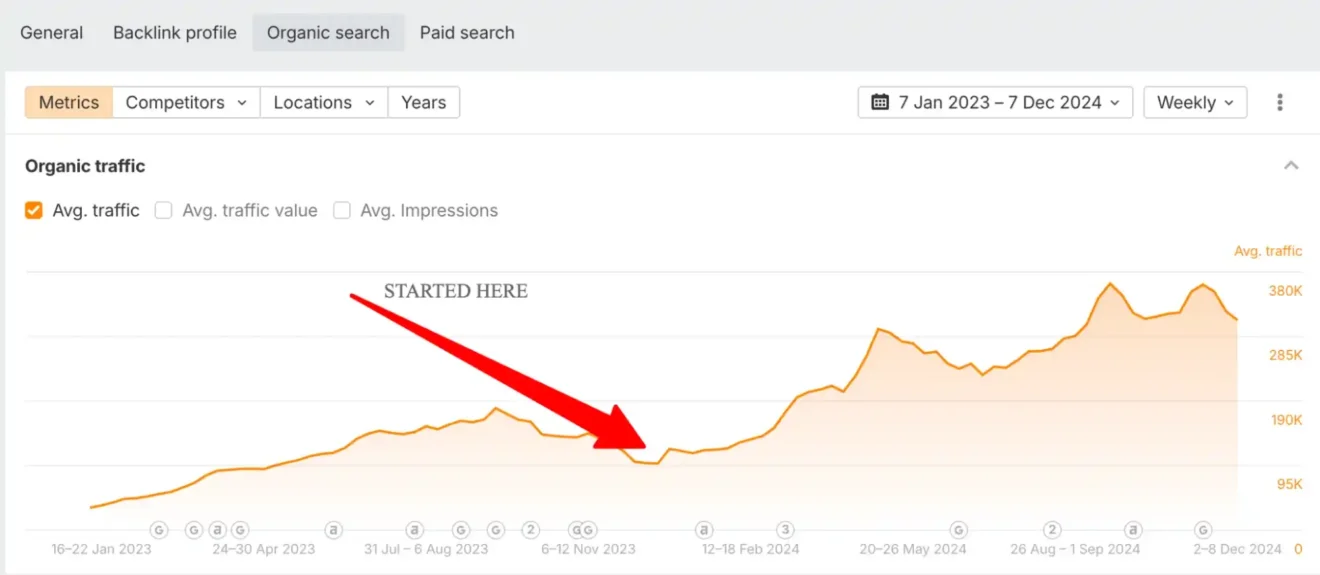
For me, this was one of those projects that proved just how powerful the right B2B SaaS SEO strategy can be. With the right research, smart execution, and a system that connects all the moving parts, even well-established companies can unlock a whole new level of growth.
SaaS SEO Case Study #2: Competing With Enterprise Giants
A few years ago, when CapCut was just beginning to grow and seriously invest in SEO, I joined their team as a link-building specialist. They hired me through Upwork, and unlike some of my other projects, this time I wasn’t working under the banner of my agency.
Instead, I came on board as a freelancer and SEO consultant, focused specifically on their link-building department.
Important!
For context, CapCut is a video editing app owned by the same team behind TikTok.
One of the biggest challenges was the sheer dominance of these enterprise players. They already controlled the top positions in search results for many high-value keywords, which meant any strategy had to be incredibly smart and well-executed to even make a dent.
On a personal note, what really motivated me to take on this project was knowing that link-building is typically expensive and resource-heavy. However, because CapCut was backed by TikTok’s parent company, budget wasn’t a concern.
Our Roadmap
When we began working together in 2022, the SEO landscape felt very different from what it is today. Back then, backlinks probably carried 60–70% of the weight in SEO performance, whereas today, with Google AI Overviews and evolving algorithms, the equation is much more complex.
Even so, one of the biggest factors behind CapCut’s success wasn’t just link-building; it was the strength of their brand reputation combined with a strong international SEO approach for SaaS.
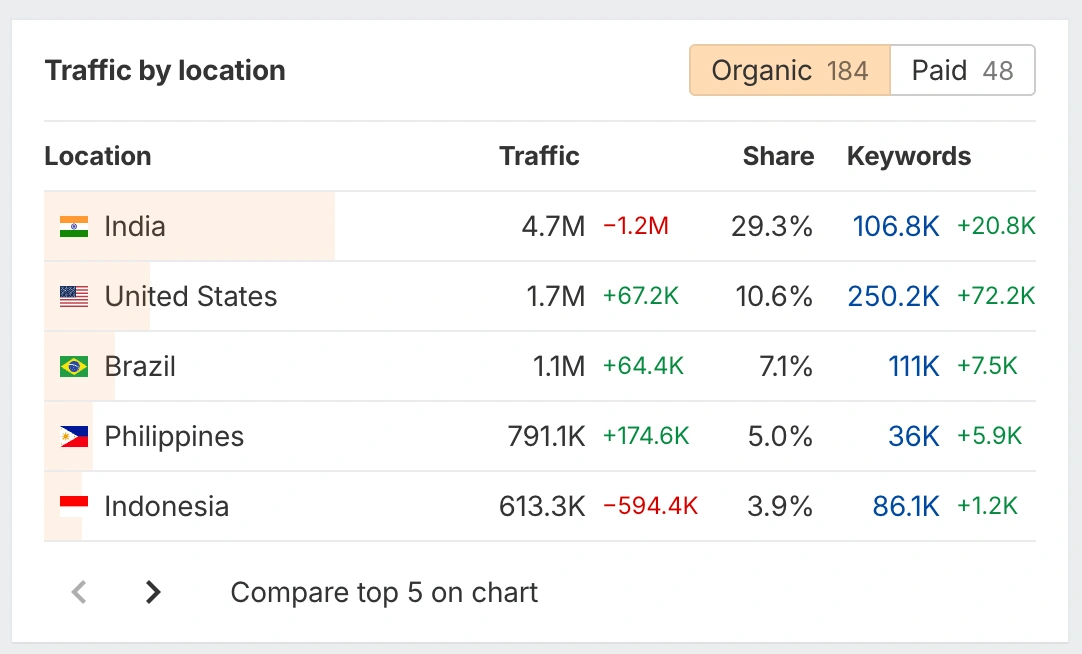
As for link-building, our SaaS-focused campaigns primarily relied on three core techniques: HARO link-building, niche edits, and resource page placements, with some guest posting on the side.
To be honest, the guest posts weren’t always in the highest-tier publications; sometimes, writing and placing top-level guest content is tough at scale. Still, the mix worked.
In the early stages, we measured opportunities based on metrics like organic traffic and relevance, often looking for sites with at least 5–10K monthly visits. Over time, as the campaign matured, we relaxed those minimums and focused on scaling.
In terms of link distribution, about 70% of our efforts targeted the homepage, with the remaining 30% focused on high-potential blog posts.
We also took advantage of multilingual link-building, which proved highly effective since competition in non-English markets was often much lower.
The Results
The outcome was massive. Within just 16 months, CapCut’s organic traffic grew from nearly nothing to around 14 million monthly visits.
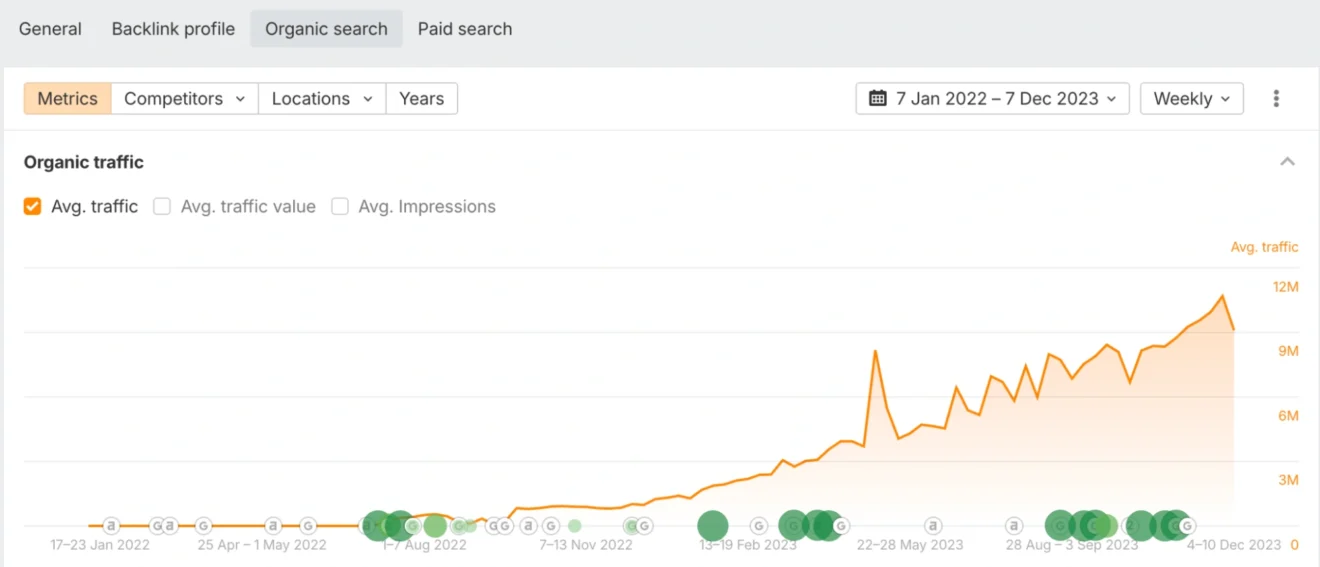
Their Domain Rating (DR) also skyrocketed, moving from the low end to above 80. Today, even though I’m no longer directly involved, I still track their progress.
The site has become a household name, and at this point, it generates backlinks and traffic organically just because of the authority it has built.
SaaS SEO Case Study #3: Winning With Programmatic SEO
In late 2024, our agency began working with a B2C SaaS company in the AI space. The platform specializes in AI-generated video creation, giving users the ability to produce high-quality videos automatically with features like customizable templates, voiceovers, and editing tools.
It was an exciting product with huge potential, but from day one, we faced a serious challenge.
The company had a limited SEO budget, and at the start, there wasn’t even funding set aside for link-building. For any SaaS company, especially in the competitive AI industry, that’s a tough place to begin.
In my opinion, this was the number one obstacle we had to overcome.
However, our team stayed persistent. We started building out a plan within those constraints, and after some progress, we were able to convince the investors to allocate additional resources.
Steps We Took
This one is one of my favorites. We kicked things off by studying the competition closely. One of the first steps was digging into the LinkedIn profiles of CEOs and co-founders from rival platforms like InVideo and Synthesia.
From there, we looked at their success stories, how they built progress, and the kind of strategies that helped them scale.
We took all of those insights together and used them as inspiration to move aggressively with our own plan.
The priority was cleaning up the technical SEO for their SaaS. Since the product was built on Webflow, we optimized crawl budget, fixed structural issues, and cleared out anything that could hold us back.
Once the technical foundation was strong, we shifted focus to content.
Research
Map audience intent
Audit
Review existing content
Prioritize
Choose revenue topics
Plan
Build content roadmap
Measure
Track pipeline impact
Our SEO content strategy was structured across the funnel: TOFU, MOFU, and BOFU. While we balanced all three, we gave extra weight to BOFU content because that’s where the conversions came from.
We published competitor alternative pages, comparison reviews, and highly targeted posts that addressed decision-making searches.
Among these, one of the most effective clusters was around the “faceless video” topic, a niche where we quickly became an authority and saw significantly higher conversion rates.
As the strategy evolved, we realized programmatic SaaS SEO could be a game-changer. So, we built out hundreds of scalable pages for tools, use cases, and product features, each targeting long-tail keywords.
This approach was one of the core drivers of our success and a big reason we were able to grow so quickly.
Finally, once the content and technical foundations were in place, we ran SaaS link-building campaigns, including PR-driven backlinks, ABC exchanges, and other effective techniques.
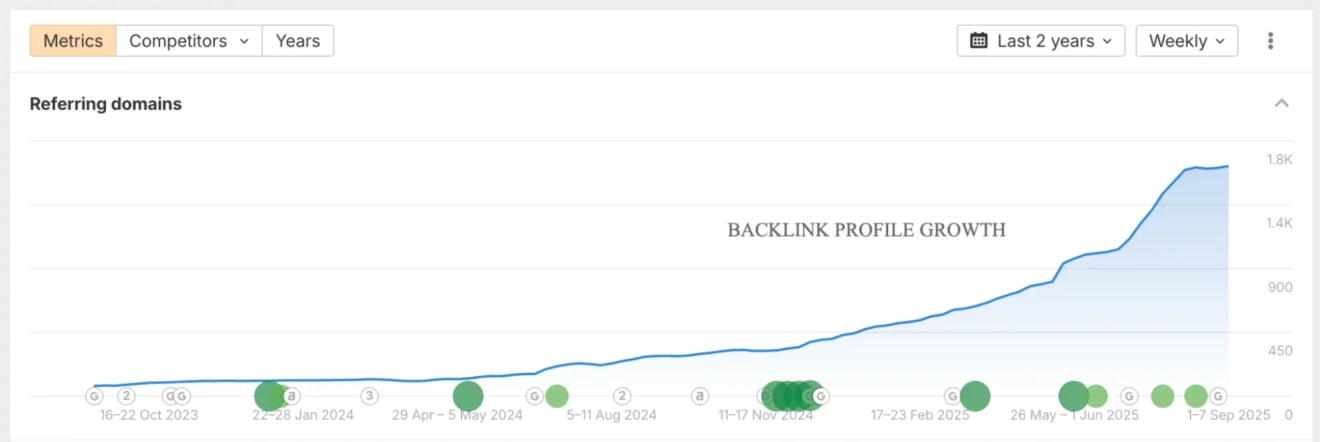
Another core part of our success was the creation of linkable assets. We developed resources that were so valuable they attracted backlinks naturally, securing over 200 links from well-known sites like Adobe.com, Sprout Social, ClickUp, and many more.
The Results
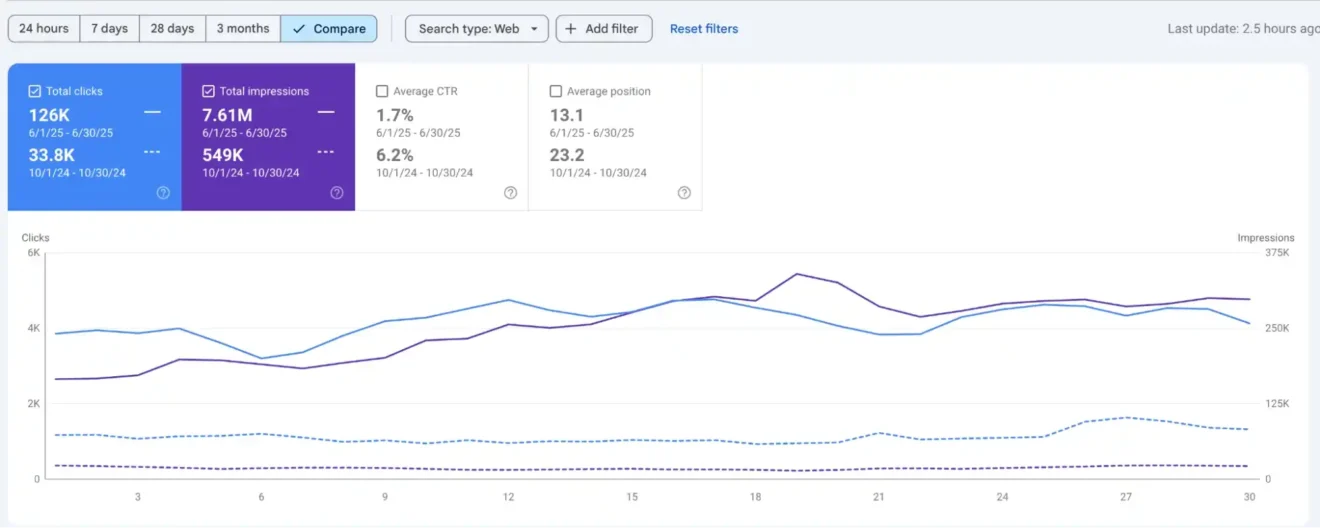
The results spoke for themselves: in just nine months, we drove a 350% increase in organic traffic.
SaaS SEO Case Study #4: Driving Growth for a B2B SaaS Product
The next case study is about a B2B SaaS project that was technically a browser extension, but it also had a standalone website. We started helping them in the very early phase, a little over two years ago. The site was built on HubSpot.
To be honest, I’ve never been a big fan of HubSpot, but for SaaS, it’s not the worst choice, especially given its reputation as a popular CMS platform. It wasn’t perfect, but it gave us enough flexibility to get moving.
The number one challenge, as with many SaaS projects, was competition. The LinkedIn automation and optimization industry is crowded, with multiple players targeting the same audience.
But here, we had one advantage: I know LinkedIn inside and out. I understand the platform, its best practices, how audiences behave, and how tools like this can actually bring value.
So we used our knowledge to guide the strategy. I imagined myself as someone who would need this extension, and from there, our team built out a customized approach.
Our Strategy
When we joined the project, the company already had more than 50 blog posts published. The problem was that none of them were optimized for SEO. There was no clear direction or strategy; the content felt random, with no structure or long-term plan behind it.
The first thing we did was run a full content audit for SaaS, and from there, we began optimizing the existing articles step by step.
Once the foundation was set, we shifted our focus to building dominance around LinkedIn-related search terms.
Over a period of about six to eight months, we created more than 100 new blog topics centered on LinkedIn. These posts weren’t isolated; we structured them as a content hub with a few pillar articles supported by clusters of related posts.
We internally linked everything together to strengthen topical authority and improve the overall site architecture.
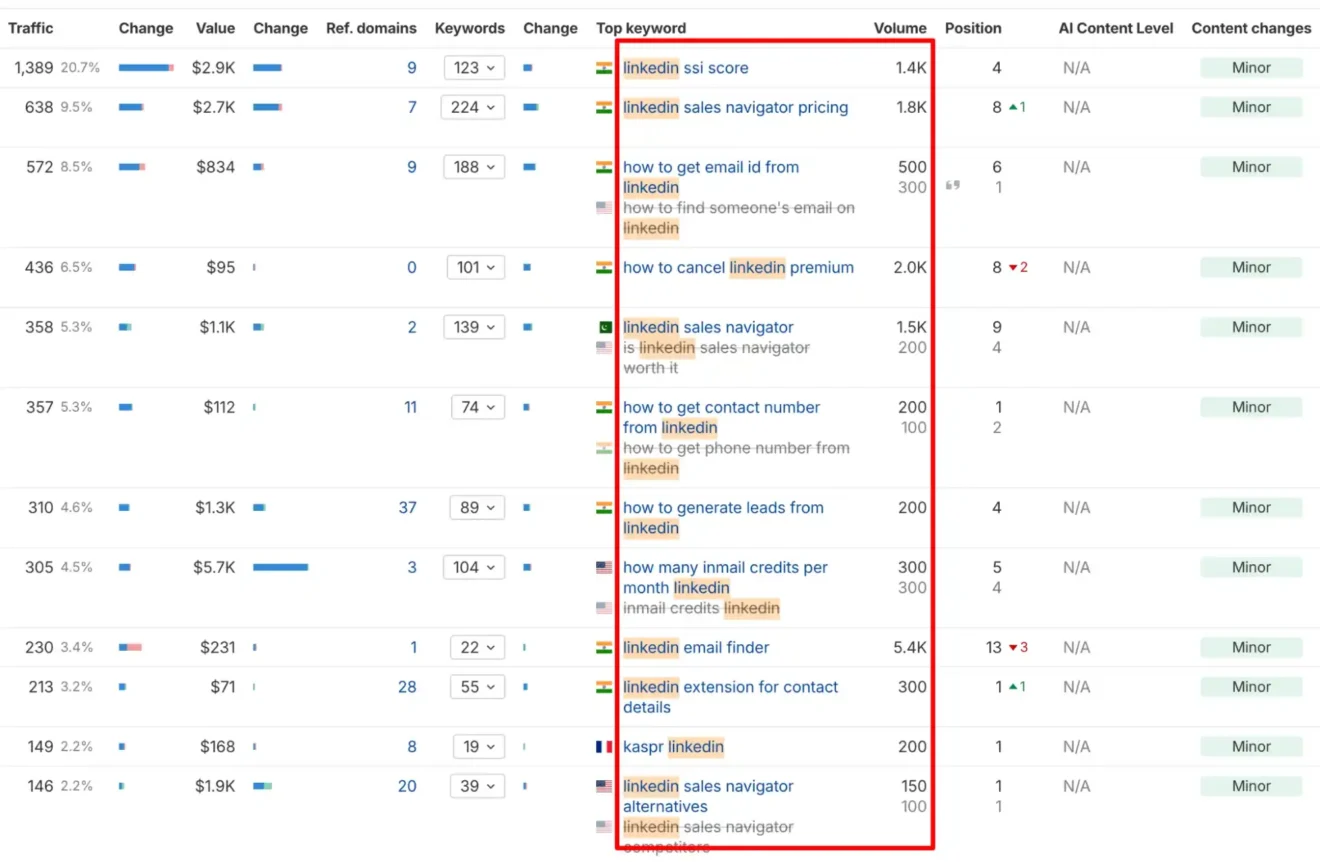
In my opinion, even without a strong backlink profile at the start, this approach alone was enough to generate meaningful results.
However, I believe that half of the success we achieved came purely from the strategy itself; the way we structured, optimized, and scaled the content.
Honestly, we also implemented some AI SEO services to speed up parts of the process, and I believe this was one of the reasons we were able to outrank competitors faster.
Timing also played in our favor. During that period, Google didn’t roll out any major updates that worked against us. Instead, the algorithm shifts aligned well with what we were already doing: focusing on content quality and Google’s E-E-A-T standards.
Beyond content, the site’s design and user experience also made a big difference; it was clean, professional, and supported the product’s credibility.
Of course, I can’t overlook the impact of their digital PR team, who helped secure valuable PR backlinks that boosted authority over time.
How We Turned Expertise Into Media Mentions
- Used real expert insights
- Created quote-worthy pitches
- Targeted relevant publications
- Personalized each outreach email
- Focused on natural brand mentions
- Mass email blasts
- Forced exact-match anchors
- Irrelevant high-DR websites
The Results
The impact of our work was clear. Today, the client’s website ranks for more than 3,000 keywords in the top 10 positions.
These include highly competitive terms such as B2B lead generation services, lead generation services, B2B lead generation, and many other relevant searches within their niche.
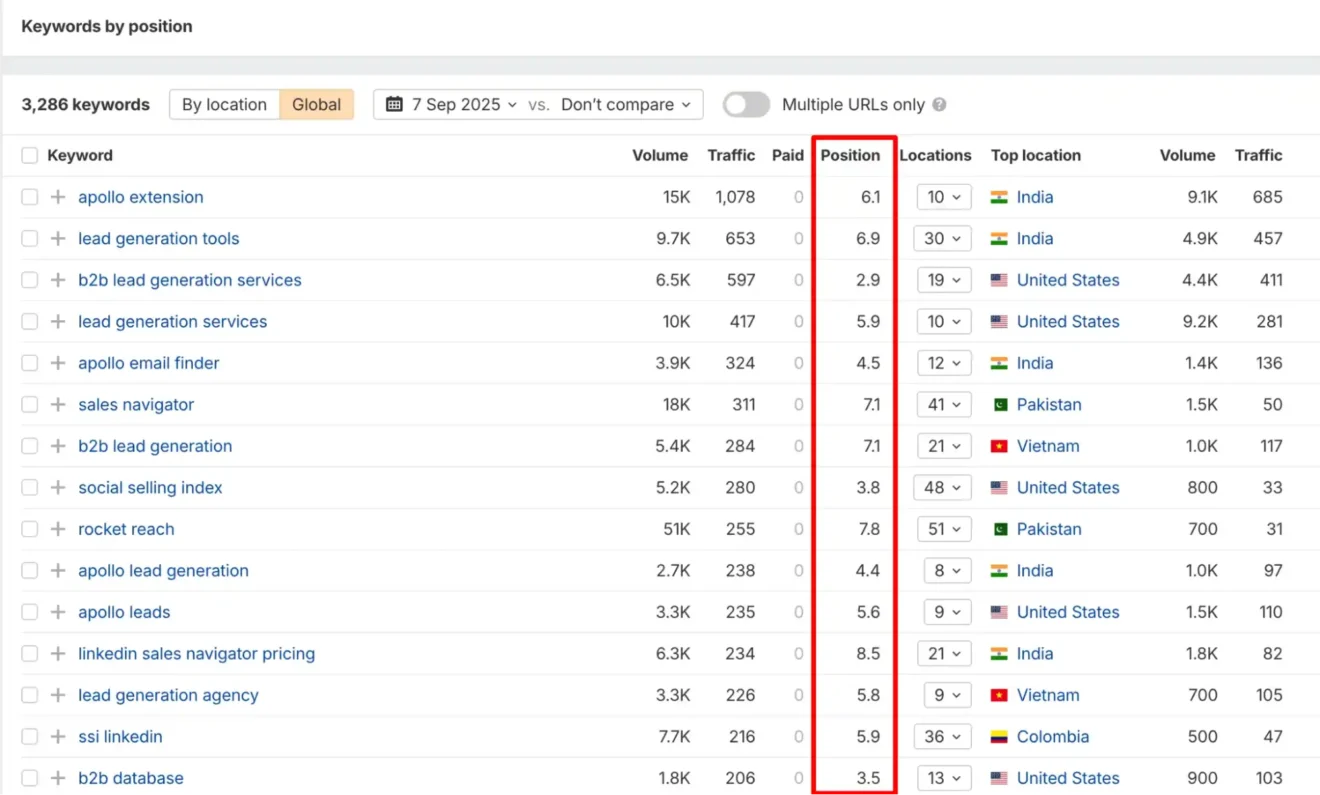
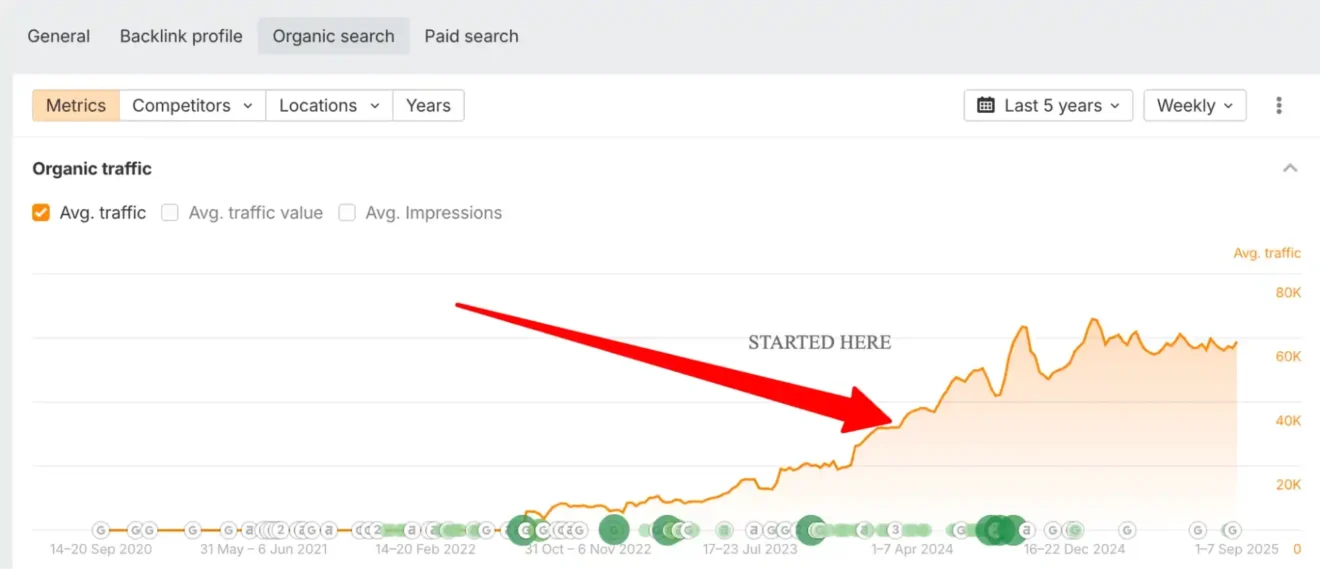
On top of that, the overall organic traffic has grown by more than 100%, turning their website into a consistent source of visibility and qualified SEO leads.
B2B SaaS SEO Case Study #5: From Zero to Beating the #1 Competitor
A little over two years ago, we partnered with TrackDesk, a B2B SaaS company in the affiliate tracking space, before their website had even launched.
For me, projects like this are some of the most exciting, because you get the opportunity to build the entire SEO strategy from the ground up, exactly the way you know it should be done.
There’s no legacy content to fix or messy structures to clean up; it’s a blank canvas.
The biggest challenge here was competition again. The industry already had two strong players: Postaffiliatepro and Tapfiliate.
Both had solid organic visibility and offered really good products. Competing with established SaaS companies like that is never easy.
However, we accepted the challenge and moved forward, equipped with the right tools, processes, and best practices to dominate the space for our client in this competitive market.
The Approach We Chose
For our team, the strategy was fairly straightforward to picture, mainly because we’d already worked on content strategies for affiliate-related software and similar projects in the past. While this wasn’t an identical case, that prior experience gave us a strong foundation to build on.
We started with the on-page SEO. The first step was a detailed keyword research process to uncover low-hanging opportunities.
From there, we mapped out all the key topics related to affiliate marketing and prioritized them by funnel stage: BOFU, MOFU, and TOFU.
Every piece of content was internally linked, creating a strong topical network that supported both relevance and authority.
Important!
Later on, the company decided to invest in link-building. It wasn’t an aggressive push, but it added another level of authority that supported the content work we had already put in place.
The Results
Within just over a year, the strategy started to pay off. Traffic began climbing steadily, and most importantly, the site started ranking for core commercial keywords in the affiliate software space.
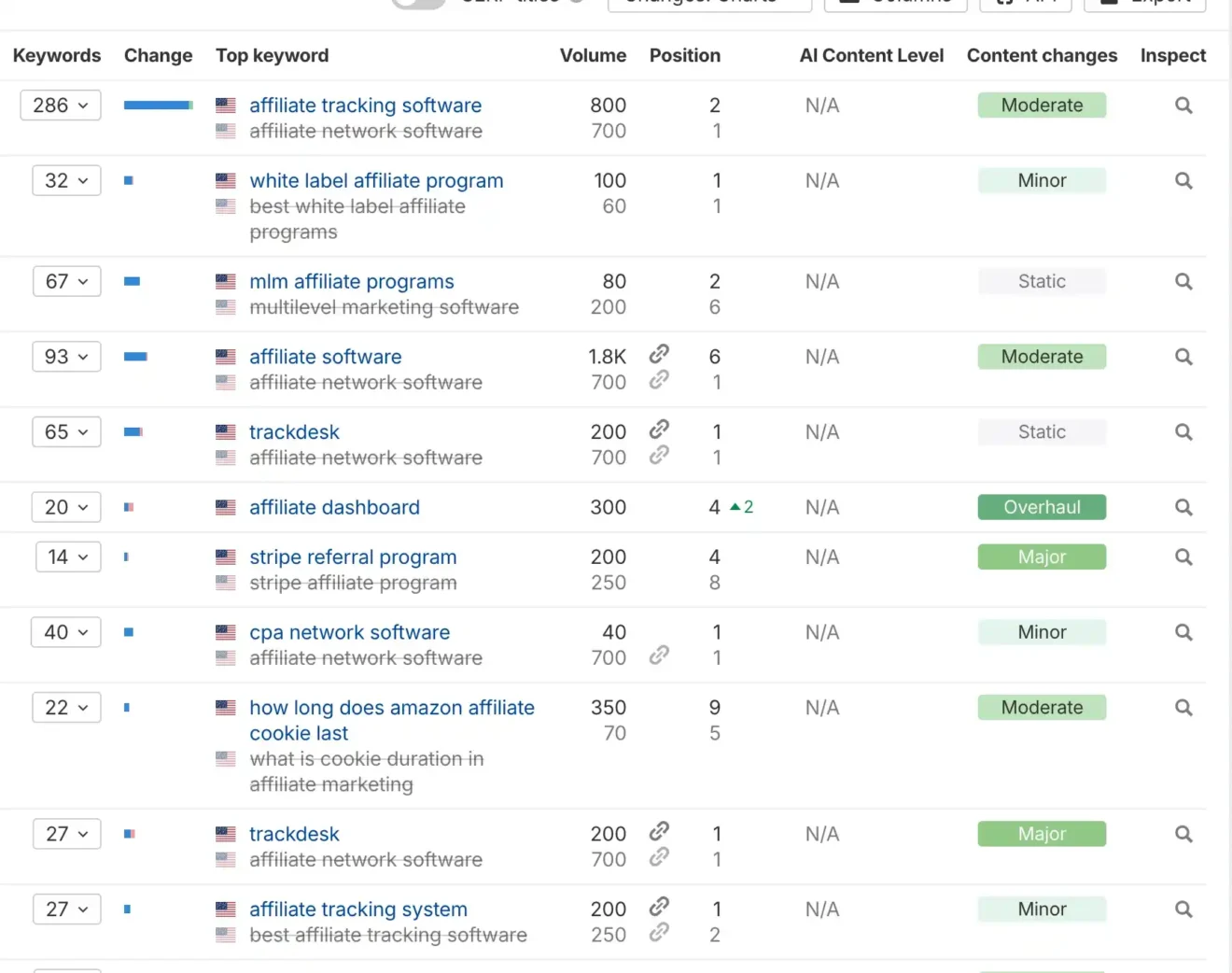
Today, the site dominates many of those terms and has grown from zero traffic to more than 5,000 organic visits.
The Bottom Line
These five SaaS SEO case studies reflect the hands-on projects we’ve worked on and the results we were able to achieve. It’s important to note that the journey was never simple. There were challenges, failed experiments, and countless obstacles along the way.
Nothing in SEO, especially in the SaaS industry, comes easy. What made the difference was our dedication, persistence, and passion for SEO and SaaS as a whole.
Every success here was built step by step, fueled by careful strategy, attention to detail, and a constant willingness to adapt. While these case studies highlight the wins, they also represent the lessons we’ve learned from the harder moments; lessons that continue to shape the way we approach each new project.
If you’re growing a B2B SaaS business and looking for a partner who not only understands the technical side of SEO but also has the experience of helping B2B SaaS companies scale, we’re ready to share that expertise with you.
Written by
Ashot NanayanSEO Strategist
Ashot Nanayan is an SEO strategist and the founder of B2BSEO.io. He helps B2B companies build search systems that do more than rank pages. His approach connects Google visibility, AI search presence, content depth, authority, and buyer intent, so brands appear where serious decisions start.