B2B SEO Case Studies From Some of Our Best Client Work

Ashot Nanayan
SEO Strategist
Table of content
We’re passionate about B2B SEO, and we always strive to deliver the best results for our clients. However, things don’t always go as planned. Sometimes we have to overcome a lot of obstacles, go through four or five algorithm updates a year, or explain to clients why even the top 2 rankings aren’t generating enough CTR because of AI Overviews.
Over the last couple of years, our specialized B2B SEO agency has worked on dozens of projects across B2B eCommerce, SaaS, IT, manufacturing, and logistics, and finally, it’s time to share some of our success stories and failures with you.
Today, I’m going to share some of our B2B SEO case studies based on our client work and hands-on experience. I’ll try to keep everything detailed while still making it simple to follow. If you’re looking for similar results, feel free to contact B2BSEO.io anytime.
Ready to grow smarter?
Book a free 30-minute strategy call with our team. We'll audit your search visibility and build a custom action plan.
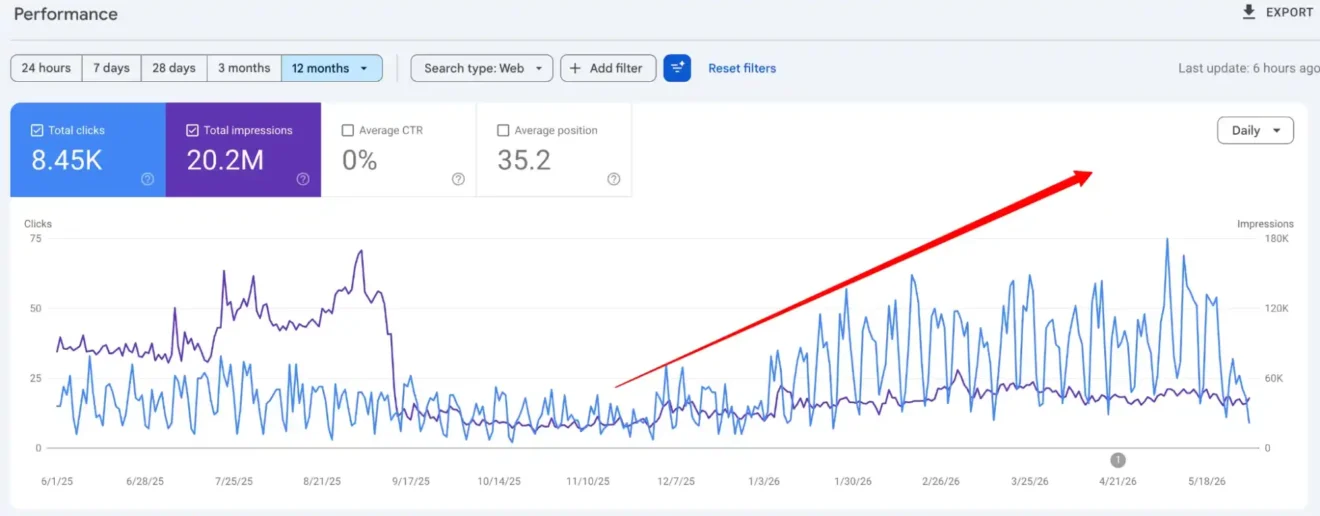
Digital Marketing Agency: 300%+ Organic Traffic Growth in 14 Months
Our first case study is about one of the best digital marketing agencies in the USA that decided to stay anonymous. We started working with them in March 2025, and we’re still working together now. Luckily, the results have been great, although of course there is always room for improvement.
The story is very interesting.
Our team enjoys every second of working on this project, and sometimes we get even happier with each new lead than the client itself, who has already gotten used to it by now lol.
To give you a bit of context, the agency has over 25 years of history, so the domain was already old enough. They had some good brand mentions, but everything else was a mess.
Just to give you an idea, they had more than 300 blog posts published over 8 years ago, hundreds of duplicate service pages, poor UX, and I’m not even talking about the mobile UX. On top of that, there were hundreds of external links pointing to competitors, and honestly, I’m still not sure why.
I’m not even getting into technical SEO yet, or the fact that the website had been hacked more than 2 years ago, and so on.
So yes, we had a lot on our plate, and here is how we started.
The Strategy & Planning on Paper
I always say to my colleagues, if you want to win, start with a written strategy; otherwise, everything else is useless. The website isn’t small (Over 450 pages), and the competition is crazy in such fields, as you know.
So, we started with an in-depth B2B SEO audit (Content, backlink profile, technicals, AI visibility, etc).
Meanwhile, our team ran a thorough SEO competitor analysis to see what to expect, first of all. Always, it’s very important to understand what to promise, what’s realistic, what budget the client needs, and what our chances are.
The Moves That Helped Growth
- Content strategy development
- Technical SEO cleanup
- Schema markup
- Building linkable assets
- Redesign
- Navigation MENU restructure
- Duplicate content removal
- No programmatic SEO
- No black-hat SEO
- No outdated tactics
Steps and Challenges
I would probably start by talking about the challenges. The thing is, some founders admire their website so much that they don’t want to change anything at all. And this was one of the top challenges, IMO, because it was very hard to convince the client to go for a redesign.
The second challenge was that they wanted to generate BS content through AI without investing in expert-written content. To be honest, I’m an idealist, and I agreed to cover some parts of the content myself even though I had no time, just because there was no other choice (I mean, there were no technical writers at that time).
But long story short, finally, we’re on the same page.
I don’t want to waste time saying that we fixed all the on-page SEO and technical issues, or unpublished all their outdated content, along with the service page cleanup.
Of course, we did.
So, let’s talk about the strategy and some of the details I’m excited to share with you.
First of all, we redesigned the service page template (WordPress), the main and single blog post design, and the header & footer.
As I said, this was a must. To save time, we designed everything with Lovable AI, after which the developer did his job with ACF.
Next, we conducted keyword research and found more than 50 service page ideas by:
- Industry
- Low KD service
- AI-focused services (E.g., AI SEO services)
- Platform (E.g., WordPress web development)
Then, our SEO team developed a killer B2B SEO content strategy for our client. We prioritized topics by the following factors:
- The potential to drive leads & pipeline
- Urgency
- Our chances to rank
- Relevance
- MOFU & MOFU topics only
We started to publish over 15-20 expert written content every single month.
At the same time, our experts researched and crafted 20+ statistics content to earn links over time, and this was really one of the core parts of our overall B2B SEO strategy because until now we earned more than 200 links from trusted publications without paying a cent.
After six months, we also started to run aggressive link-building campaigns by targeting the homepage and one or two service pages with exact and phrase match anchor texts.
What We Did for AI SEO
Once the core foundation was in place, our strategists started optimizing the website for LLMs (AI SEO).
I’m not saying we reinvented the wheel, but here is what worked for us.
First of all, we published twenty-plus listicles on our website and appeared in over fifteen external listicles, after which we noticed a significant difference, to be honest.
Next, we made sure the site had all types of schema and that the content was structured for LLMs and AI Overviews.
Luckily, today we generate over 1,000 visits per month from LLMs alone.
Of course, I tried to share everything we did over 14 months in just a few paragraphs, focusing on what was more important and what played a big role in our campaign.
The Reward
The #1 reward is the appreciation we get from our clients, frankly.
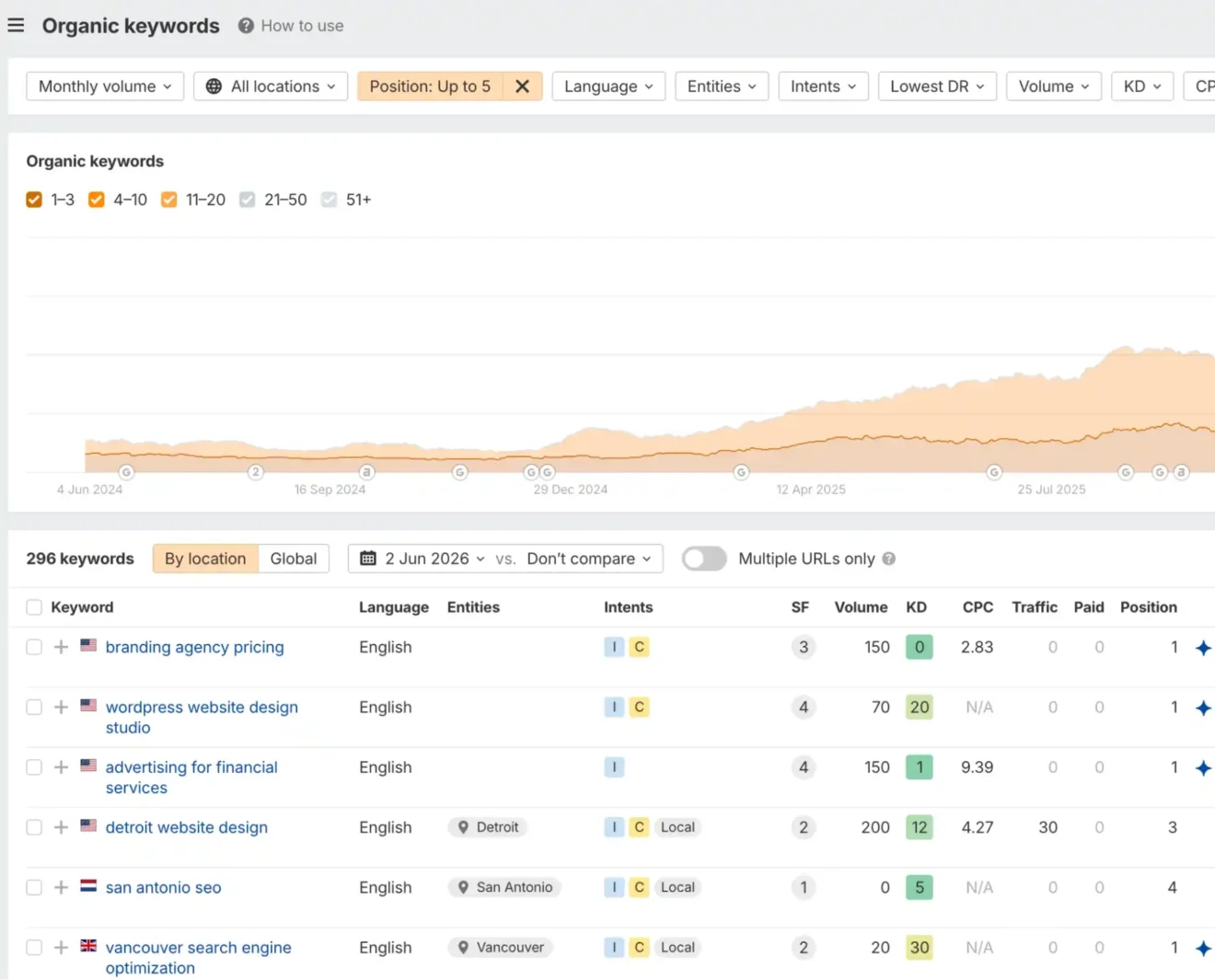
But if we’re talking numbers, then I would say hundreds of high-ticket leads, strong organic visibility across AI search engines and Google, hundreds of brand mentions, over 400% organic traffic growth, and hundreds of commercial keywords ranking in the top 5.
FeedBird: 450%+ Organic Traffic Growth in Just 9 Months
Feedbird is an affordable marketing services platform that sells various packages, from social media marketing to SEO and copywriting. Our agency started partnering with their company a few months ago, and I would say this is one of the easiest cases where we were able to achieve great results without sacrificing at least one of our experts’ health and nerves.
When we started, the current SEO health was acceptable, but there were a lot of missing parts.
For example, the authority was enough to rank for some highly competitive keywords, but the thing was that they didn’t have service pages for different cases, industries, and platforms.
On the other hand, they had over 450–500 blog posts, but 70% of those blogs were either TOFU, outdated, or cannibalized.
So we got started!
Our Journey
We picked our top 20 direct competitors and analyzed their performance, AI visibility, content, landing pages, and backlink profiles. Of course, it’s always very challenging to compete with giants like WebFX and Thrive Agency. However, we developed a custom B2B SEO strategy for our client that, within a few months, turned into something like this:
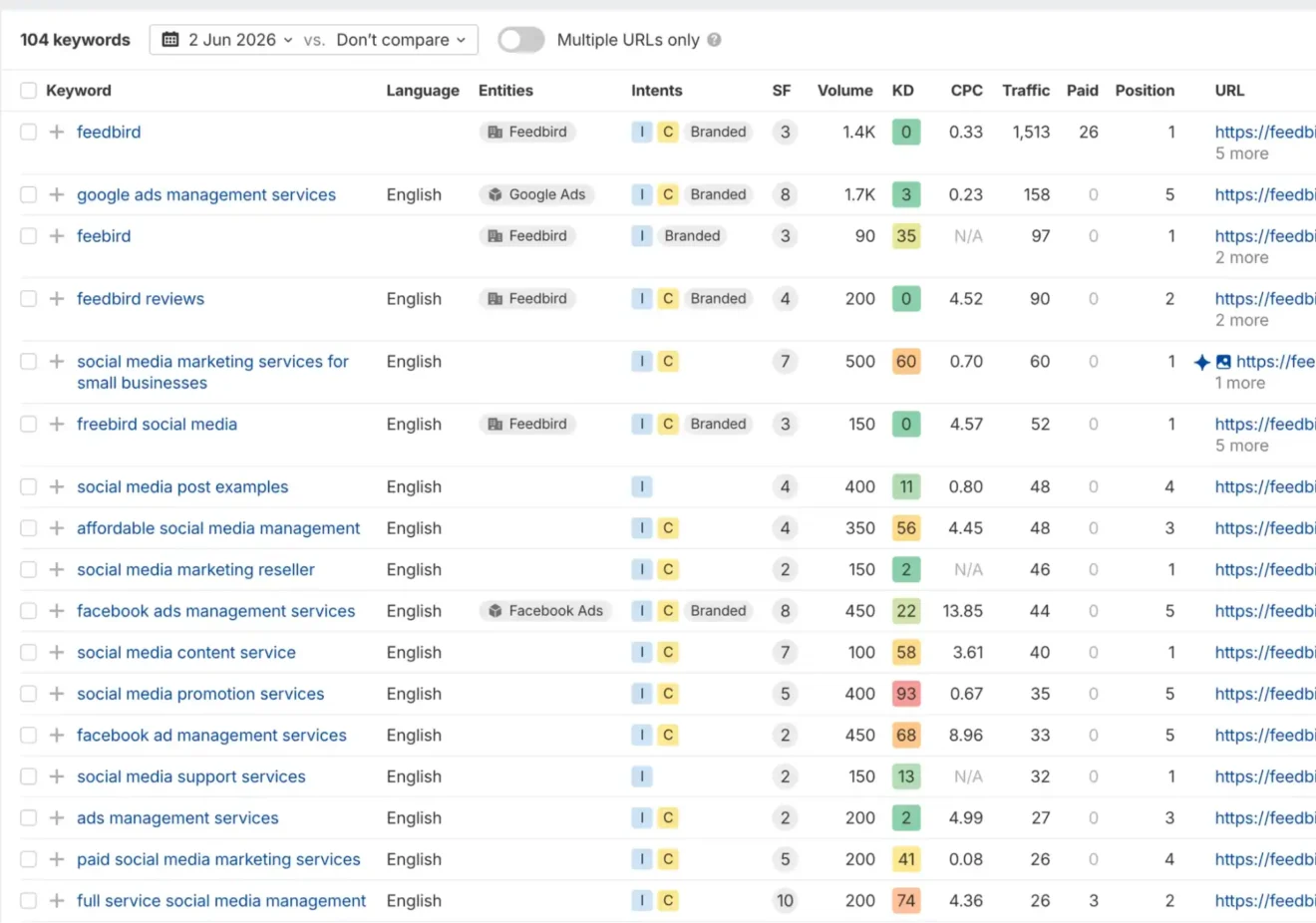
Promising, right? I think so. But how did we achieve such results? Let’s see.
First of all, we exported all their URLs from the XML sitemap and created a keyword map where, next to each URL, you would see the following:
- Target keyword
- Competition level
- Intent
- Action (E.g., it should be updated or merged)
- Other metrics
After that, we started carefully finding cannibalization issues across service pages, blog posts, and location pages.
It took over 1.5 months for us to clean everything up and come up with a strategy and action plan.
Following, we conducted in-depth research and found more than 15 service page ideas. For example, instead of only targeting the service page/keyword “ Social media services”, we also created new service pages such as “Meta Ads management” and “Instagram growth services”.
We also worked on technical and on-page SEO-related stuff, plus made sure schemas, metadata and similar aspects are up to date.
The Most Interesting Part
Our strategists decided to approach the project strategically and develop a content strategy built around BOFU topics only. Here is the plan month by month.
The Content Strategy Monthly Plan
Our 6-month content roadmap built around rankings, authority, and qualified pipeline growth.
Update Existing Content
We started by refreshing the pages that already have history, impressions, backlinks, or weak rankings. Improve accuracy, structure, internal links, CTAs, and search intent alignment.
Existing assets improved firstCover Cost-Related BOFU Topics
Our team created pricing, cost, budget, and package-related content for buyers who are already comparing options and trying to understand investment.
High-intent cost topics plannedBuild ROI & Comparison Guides
We published ROI pages, calculator-style content, alternative pages, comparison guides, and “SEO vs.” content to support decision-stage buyers.
Decision-stage content expandedCreate Statistics-Based Linkable Assets
Our experts built original statistics pages, industry data roundups, benchmarks, and research-style content that can attract backlinks and brand mentions.
Linkable assets createdPublish Management & Strategy Tips
Next, we covered MOFU topics around SEO management, reporting, prioritization, team workflows, content planning, and campaign improvement.
Mid-funnel trust content addedProduce Listicle-Style Guides
We created best tools, best agencies, best platforms, examples, templates, and expert-pick listicles that can rank, earn links, and capture buyers.
Listicle-style growth pages publishedIt’s worth mentioning that we also updated 100+ topics by focusing on Google E.E.A.T. factors, internal linking, and optimization for LLMs (AI search engines).
We added a lot of assets and tables, cleaned up generic AI content, and made sure one keyword wasn’t competing with another.
Once we had the first batch, we started to promote the BOFU topics with SaaS backlinks (ABC exchanges) and digital PR.
The Result
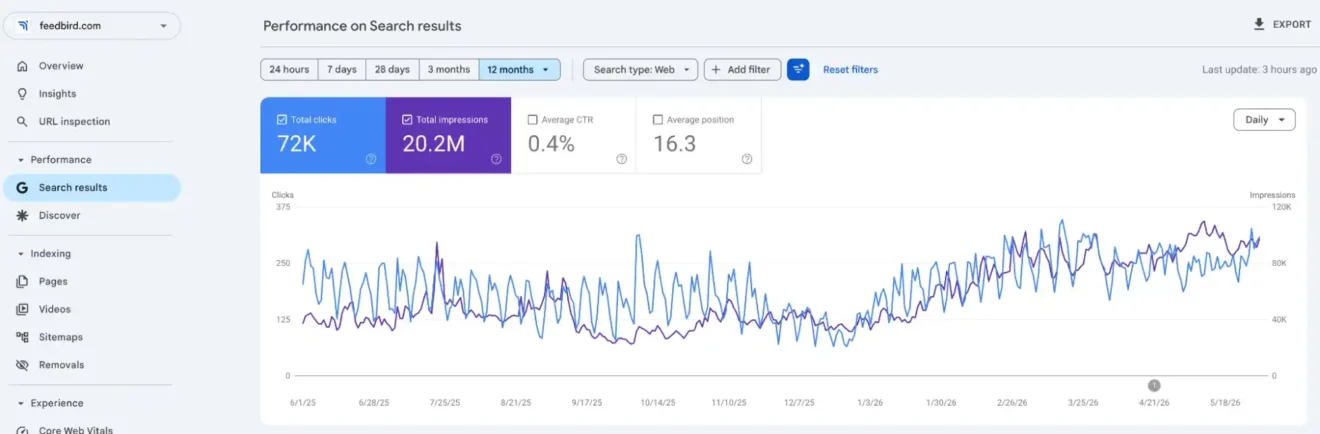
In result, we got 450%+ organic traffic growth on Google, and as I already showed, hundreds of service pages in the top 5.
Unfortunately, I cannot say this is one of the best case studies where I can be proud of the results in AI search results, but I also would not say that we dedicated a lot of effort to AI visibility optimization.
I’d like to emphasize that the client didn’t want to share the data regarding the B2B leads generated through SEO. However, he said that it was around 3–4x higher in recent months.
Influize: From Zero to 2,500 Monthly Visitors with a B2B Content Strategy
Influize was a PR agency, or an influencer marketing agency, over 2–3 years ago, and then decided to turn into a full-service digital marketing agency last year. It’s not by chance that I want to share this company’s SEO case study, because the client requested programmatic SEO (Which I don’t admire, honestly) and AI content writing (Like publishing 500+ pieces of content written by AI, without spending a lot of hours manually reviewing every single paragraph), but the thing is that it’s working.
Yeah, it’s working, though I have some othr
programmatic SEO case studies where we see that it doesn’t work. So, I decided to share everything we did for this agency website, along with the timing and investments.
Long Story Short: How We Started
As I said, for this project, we didn’t follow the current SEO trends, such as keeping E.E.A.T. in mind or strictly optimizing content for humans first of all.
However, it’s working. But what did we do, finally?
Essentially, the client requested something like, “Go and find all the sub-services under the main services and develop the service pages.”
Next, he said, for each service page, find all informational keywords with at least 100 KV according to Ahrefs and generate content briefs.
Do you see where I’m coming from, right?
So, as you see, most of the work had to be automated from content briefs to content writing and optimization.
So, our process looked like this:
Our Automated AI-Written Content Process
A faster content workflow for producing SEO pages at scale without losing structure, intent, or basic quality control.
Keyword Research & Mapping
Start by finding relevant keywords, grouping them by intent, and assigning each topic to the right page type, funnel stage, and target audience.
Keywords mapped to pagesContent Brief Creation
Prepare simple briefs with the main keyword, search intent, page structure, headings, internal links, FAQs, and the angle the content should follow.
SEO-ready briefs preparedAI Content Writing
Use AI to create the first draft based on the brief, then adjust the copy so it sounds natural, useful, and aligned with the brand.
First drafts generated fasterQuick On-Page SEO Optimization
Review titles, meta descriptions, headings, internal links, keyword usage, schema opportunities, CTAs, and formatting before publishing.
Pages optimized before launchPublishing & Indexing
Publish the content, submit URLs for indexing, check crawlability, add internal links, and monitor early impressions, rankings, and indexation status.
Content pushed live and trackedOf course, we couldn’t just sit there. We tried to optimize at least the basics. I also asked one of our experts to review every single piece of content quickly to make sure they’re all optimized according to on-page SEO best practices.
And, here is what we achieved:
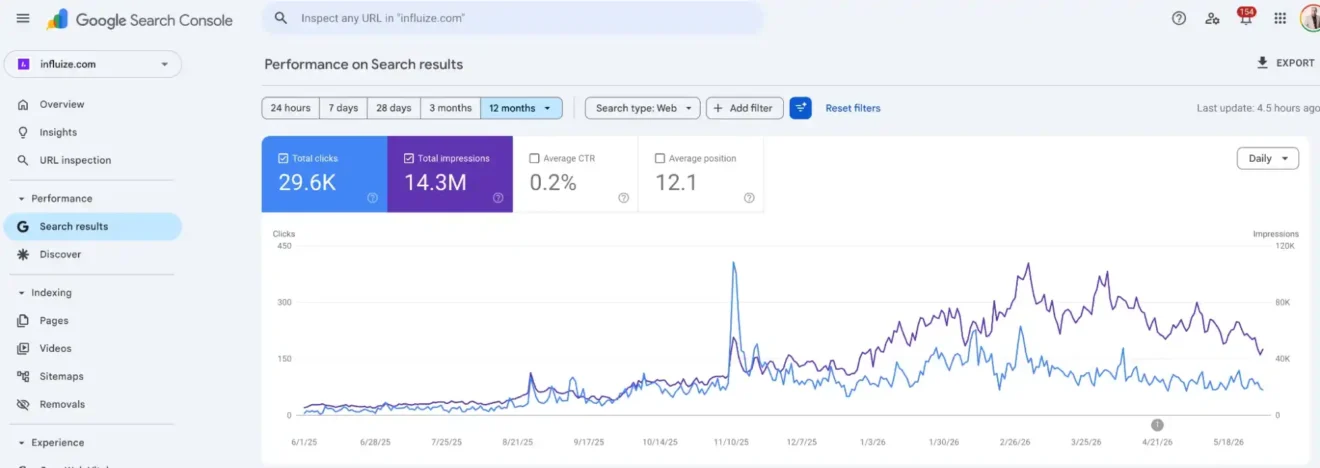
I’m not saying that this is incredible, but considering the investment, the resources, and the fact that Google says E.E.A.T. is a very important factor, I would say not at all in this case.
Honestly, this is not the first time we’ve seen AI content (I mean programmatic AI content, otherwise AI content is okay) working.
I’m not sure about tomorrow, but it has been somewhere like 9–12 months, and it’s still up, so I just hope the upcoming updates won’t crash everything.
AI-Powered Phone Support Platform: 2,500% Organic Traffic Growth
Our last case study is about a B2B SaaS brand, a conversational AI phone support platform specifically designed for eCommerce and Shopify brands. The client preferred to stay anonymous.
Before we move ahead, here is a little background to give you an idea. In December 2025, we signed a contract with this software brand. Personally, I was very excited because the design and structure were great, they had expert writers (the co-founders, so you can imagine), and a proper SEO budget for off-page SEO, PR, and our services.
We never miss such opportunities. The good thing is that we understand both B2B eCommerce SEO and B2B SaaS SEO, which is a big advantage, so we started the journey.
The Goals & Challenges
Let’s start with the challenges. The #1 challenge was that there was no demand for the product itself, which means keywords like “Shopify phone support software” or related terms had no volume (meaning, they were not searchable).
The second challenge was that the website was new, so we had to figure out how to rank, what kind of short-term wins to include in our strategy, and how to turn an indirect audience into leads.
Our goal was to build topical authority, build authority, and find the right audience that might be interested in our product.
Our Process & Results
So, here is what we did. First of all, we used a BOFU-heavy content strategy built around
-
1
Comparison pages
A large /comparisons/ section with pages like Gorgias vs LiveChat, Zendesk vs Gladly, Vapi vs Retell, Bland vs Synthflow, and many “alternatives” pages.
-
2
Shopify-specific positioning
Almost every page connects the product back to Shopify: AI phone support for Shopify brands, Shopify BPO, Shopify support tools, Shopify alternatives, etc.
-
3
Industry landing pages
We created pages for Shopify verticals like supplements, cosmetics, pets, baby, electronics, home and garden, health and wellness, jewelry, fitness, and fashion.
-
4
Case studies with numbers
Their customer pages use strong outcome-based titles like “88% of phone support without a human,” “79% inbound calls resolved,” and “6.7x phone volume without a hire.”
-
5
Pain-point blog content
We targeted operational pain points around Shopify support, BPO, outsourcing, AI customer support, personalization, and cost reduction.
Next, we ran link-building campaigns (150+ contextual links) and used the following techniques:
- Guest posting
- ABC exchanges (Very common in SaaS SEO)
- Niche edits
- Created statistics content to attract links organically
It was a little challenging, but we were able to secure dozens of placements in listicle-style guest posts, which was very helpful, in my opinion.
After 6 months, we suddenly noticed that our traffic jumped, and according to GSC data, we generate over 2,000+ clicks/month (Though, I have to attach the Ahrefs report).
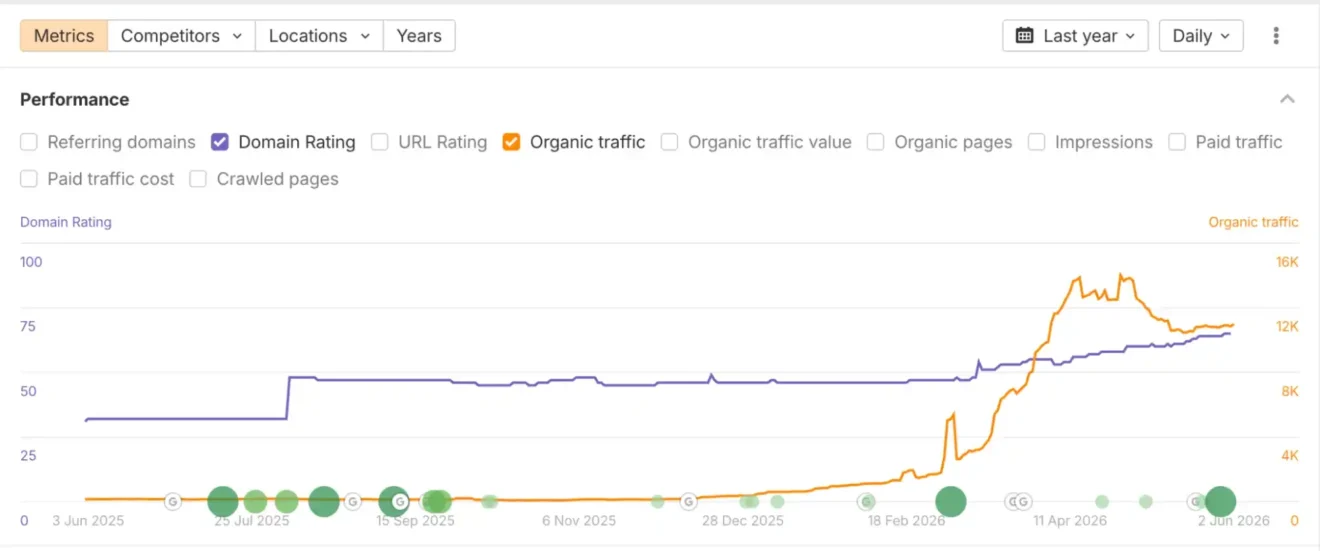
I would not say the leads are always high-quality, but we try, and I believe this is just the beginning.
If you’re looking for a trusted, specialized B2B SEO agency that can deliver similar or even better results, don’t waste your time testing random strategies or putting your budget at risk with the wrong team.
At B2BSEO.io, we work with B2B brands that want real growth, qualified leads, and a strategy built on experience. If that sounds like what you need, feel free to contact us today and let’s talk about your website, your goals, and what we can realistically achieve together.
Written by
Ashot NanayanSEO Strategist
Ashot Nanayan is an SEO strategist and the founder of B2BSEO.io. He helps B2B companies build search systems that do more than rank pages. His approach connects Google visibility, AI search presence, content depth, authority, and buyer intent, so brands appear where serious decisions start.