A Practical B2B Enterprise SEO Guide for Modern Teams

Ashot Nanayan
SEO Strategist
Table of content
B2B SEO is my passion. Everyone on our team knows that. We’ve successfully run dozens of campaigns for all kinds of brands, from enterprise companies to SaaS and eCommerce businesses. Over the last few years, our specialized B2B SEO agency has seen a lot, but what we experienced in the enterprise B2B space was honestly very different and hard to compare to anything else.
In this article, I’m excited to share specific enterprise B2B SEO tips and some advanced strategies we’ve tested ourselves. Trust me, this is not the same B2B SEO guide you can find anywhere. I tried to be as specific as possible so you do not waste your time and leave disappointed.
I hope you find it useful. Enjoy.
Ready to grow smarter?
Book a free 30-minute strategy call with our team. We'll audit your search visibility and build a custom action plan.
What is B2B Enterprise SEO?
B2B enterprise SEO is basically SEO for large businesses that sell to other businesses, usually at a bigger scale, with more services, more pages, more decision-makers, and longer sales cycles.
A few easy examples of B2B enterprise websites would be Salesforce.com, ServiceNow.com, and IBM.com. You could also think of companies like Adobe Experience Cloud or Workday in a similar category, because they sell complex business solutions to larger organizations rather than simple consumer products.
The Importance of SEO for B2B Enterprise Brands
For enterprise brands, B2B SEO becomes even more important because the stakes are much higher. You are trying to protect visibility across hundreds or even thousands of pages, support different products or service lines, and stay present during a much longer and more complex buying journey.
In many enterprise cases, buyers do not convert after one search. They may discover you through one topic, compare you through another, and come back later through a branded search or direct visit.
I also think SEO is very important for B2B enterprises because large brands cannot rely only on brand awareness. Even well-known companies lose opportunities when they fail to appear for non-branded, high-intent searches tied to real problems, use cases, or comparisons.
The Goals of Enterprise B2B SEO
The goals are usually very different from what smaller businesses focus on. In most cases, the goal is to improve visibility across a large service or product page, support a longer and more complex buying journey, and make sure the brand appears at multiple stages before a high-value deal is ever closed.
Here is what I prioritize for my enterprise B2B SEO clients
-
1
Own more of the buying journey, not just a few keywords
Enterprise buyers rarely convert after one search. They research problems, compare vendors, read category pages, check integrations, look for use cases, and often revisit the same brand several times. One of the biggest goals of enterprise SEO is to build visibility across that full journey.
-
2
Increase qualified pipeline from high-intent search themes
Enterprise SEO should help generate traffic that can realistically turn into demos, sales conversations, and revenue. That usually means focusing less on broad traffic numbers and more on solution-aware, industry-specific, and decision-stage searches.
-
3
Build brand trust at scale across a large website
In enterprise SEO, trust is very important. Buyers often review multiple pages before taking action, so one key goal is to make sure the website consistently shows authority through strong content, clear positioning, proof points, and a solid overall experience across hundreds or even thousands of pages.
-
4
Create a scalable search growth system, not one-off wins
Enterprise B2B SEO should not depend on a few pages ranking well. A major goal is to build a structure that can scale across product lines, industries, locations, features, and use cases, so search growth becomes more predictable and easier to expand over time.
Top 8 B2B Enterprise SEO Strategies
As I mentioned earlier, we’ve worked with many enterprise B2B clients, including international companies, and supported them with everything from international B2B SEO and technical audits to B2B keyword research, link-building, and broader growth-focused SEO work. Because of that, I’ve had the chance to see which strategies work and which ones just sound good on paper.
Of course, priorities can change based on your current situation, industry, website strength, internal resources, budget, and overall goals. But if we look at the bigger picture, these are the B2B enterprise SEO strategies I find the most relevant, practical, and consistently effective right now.
Optimize Crawl Budget
A lot of B2B SEO agencies and freelancers spend too much time following SEO trends, recycled playbooks, and templated checklists. You don’t believe, but they often miss one of the areas that can have one of the biggest impacts on large enterprise websites.
Yeah, don’t get surprised; I’m talking about crawl budget optimization.
In many cases, nobody has seriously taken care of the site structure for years. Sometimes, there are hundreds or even thousands of pages, a messy hierarchy, old URLs published 10 years ago, unnecessary pages getting crawled, heavy JavaScript, resources, and tons of unoptimized images.
That’s why one of the smartest strategies, even if it sounds simple, is to focus on crawl budget optimization.
Start from the GSC report.
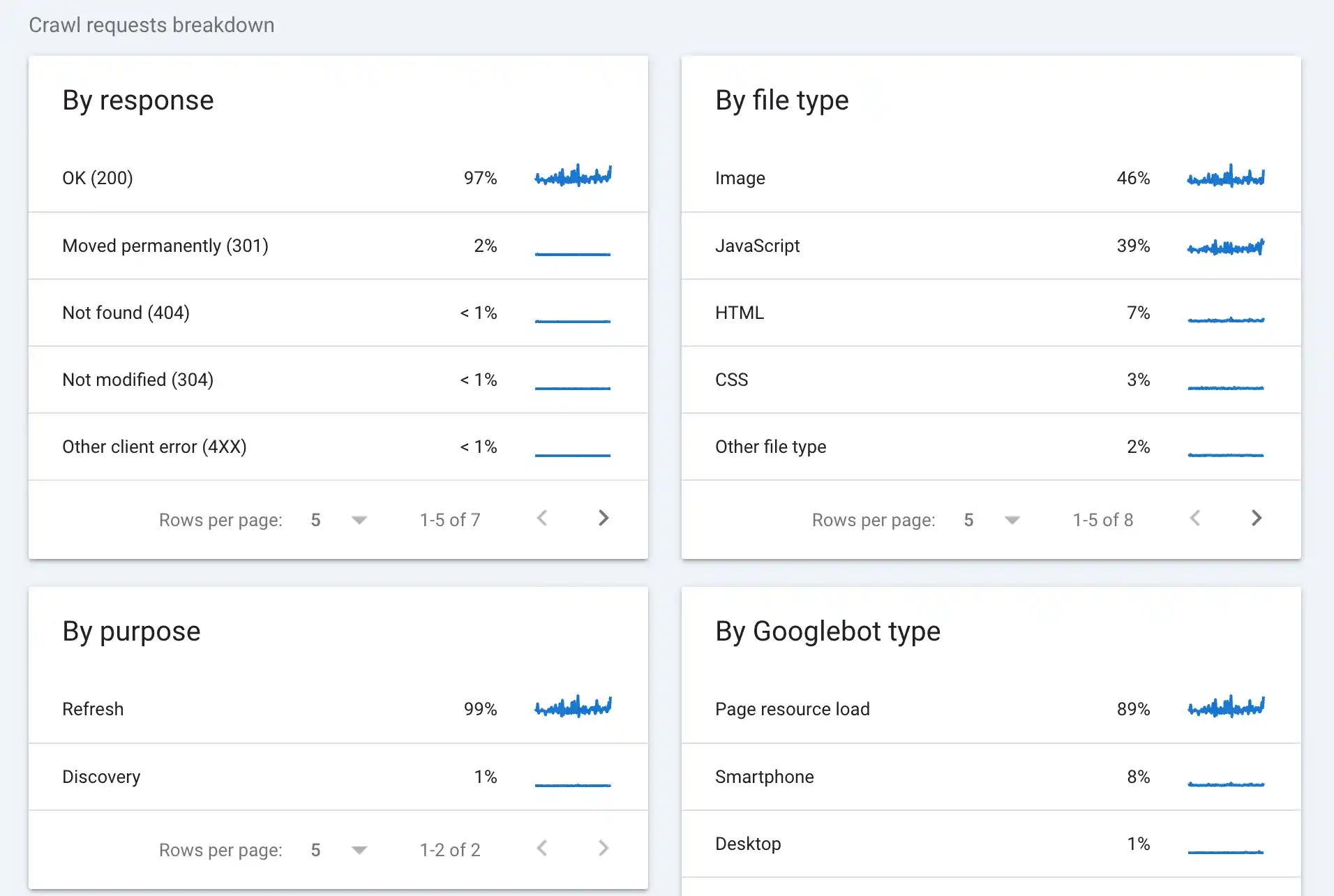
Yeah, my friend. The first place I would start is the Google Search Console crawl stats report. That should be one of your starting points if you want to understand how Google is spending its crawl activity on your site.
It may sound like a generic recommendation, but on large websites, it can make a big difference.
Create Topic Clusters Around Commercial Depth
One of my favorite B2B enterprise SEO strategies is to build topic clusters around your main commercial pages. In most B2B enterprise websites, you usually do not have dozens of money pages. In many cases, you have just a few high-ticket service or product pages that really matter.
So instead of publishing random blog posts, I prefer to support each of those pages with closely related content that helps Google understand the topic better and helps potential buyers move closer to a decision.
Amazing, right?
This approach helps you build relevance around the commercial page, create stronger internal linking, and improve your chances of ranking for broader and more specific searches.
It also makes your B2B SEO ROI much easier to understand, because the content is not there just to bring traffic. It is there to support the pages that can bring in revenue.
You can also read one of my guides on B2B SEO lead generation, which is closely related to this topic.
Turn Integrations Into a Serious SEO Growth Opportunity
One strategy I have seen work really well in B2B enterprise SEO is turning relevant integrations into actual SEO growth opportunities. A lot of companies mention their integrations somewhere on the site, but they do it in a very light way, almost like a simple feature mention.
In reality, if the integration is something your audience actively searches for, it can become its own acquisition channel.
People do not just search for your main service. They also search for things like “[your product] + Salesforce integration,” “HubSpot integration for payroll software,” or “best CRM that works with NetSuite.”
That is where things can get interesting. In many cases, they are search opportunities.
Look:
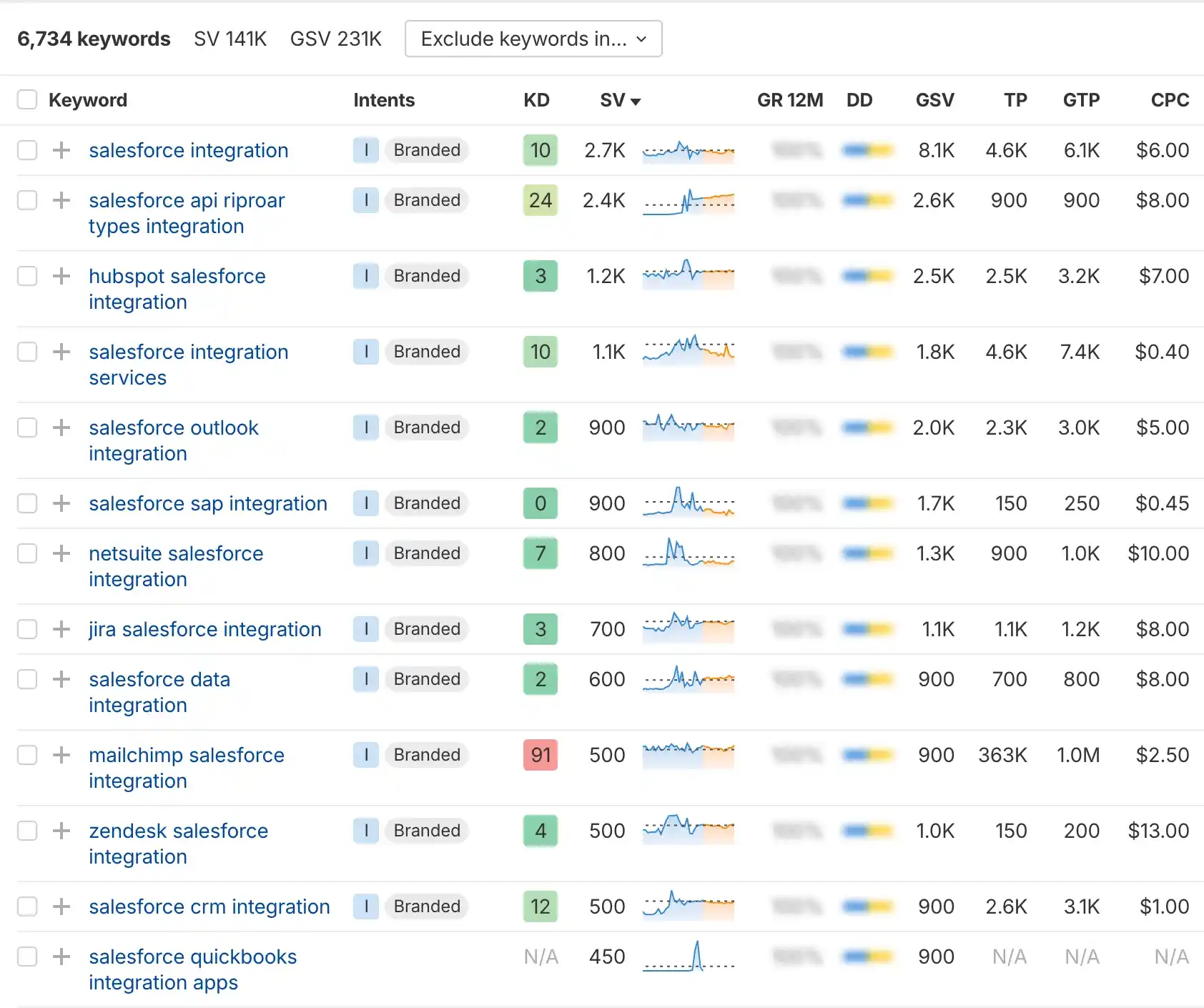
The same applies to service businesses. If you are an IT company that works with Microsoft 365, AWS, Cisco, or specific ERP systems, there is often demand around those relationships.
Many integration pages drive highly relevant traffic because the searcher is usually not browsing casually. They are already comparing tools, checking compatibility, or trying to solve a real business problem.
By the way, we also provide SEO services for IT companies.
Use Internal Links to Push Authority Into Bottom-Funnel Pages
One of my favorite enterprise B2B SEO strategies is using internal links to push more authority into bottom-funnel pages. Yeah, I like to make BOFU blogs and BOFU commercial pages work together.
A strong way to do that is by creating bottom-funnel blog content such as comparison pages, alternatives pages, listicles, and closely related cluster content that targets highly relevant search intent.
I would say this is one of the strongest B2B SEO content strategies because it helps you attract qualified traffic while also supporting the pages that drive leads.
Then, from those pages, you strategically link to your core commercial pages.
I’m not talking only about standard contextual internal links placed inside the copy, even though those matter a lot.
I’m also talking about actively promoting your commercial and BOFU pages through banners, clickable buttons, and other clear internal CTAs that move users deeper into the site.
Optimize for AI Overviews and LLMs
Well, my view is still the same: AI SEO is mostly just good SEO. I’ve said that in many of my articles, and I still believe it. But whether we like it or not, AI-driven results are becoming a bigger part of how people discover brands, websites, and answers, so it makes sense to pay attention to them as well.
I also have a much more detailed guide on how to optimize your website for AI SEO, and I think you’ll enjoy that one too.
But for now, here’s my quick checklist for improving your chances of showing up in LLMs and AI Overviews (B2B enterprise space in mind)
-
1
Clarify your entity footprint
Make sure your brand, products, leadership, locations, industries, services, and parent company relationships are consistent across your website, LinkedIn, directories, PR mentions, review platforms, and partner pages.
-
2
Build answer-ready pages
Enterprise buyers ask specific questions before they talk to sales. Create pages that clearly answer use cases, integrations, implementation timelines, compliance needs, pricing logic, vendor comparisons, security concerns, and industry fit.
-
3
Strengthen third-party validation
LLMs and AI Overviews often rely on sources beyond your own website. Earn mentions in analyst roundups, software directories, industry listicles, partner ecosystems, podcasts, case studies, and trusted publications.
-
4
Add proof to every commercial page
Enterprise SEO content needs evidence, not just claims. Add customer examples, screenshots, benchmarks, certifications, security details, reviews, awards, implementation stories, and measurable outcomes where possible.
-
5
Improve technical crawlability
Make sure important content is indexable, internally linked, fast enough, cleanly rendered, and not hidden behind scripts, tabs, gated forms, or broken templates. AI visibility starts with content that search systems can access.
-
6
Track AI visibility manually
Don’t rely only on rankings. Test prompts in ChatGPT, Gemini, Perplexity, and Google AI Overviews around your category, competitors, use cases, and “best vendor” searches to see where your brand appears or disappears.
Invest in Digital PR
Most agencies will try to sell you a standard link-building package, and to be honest, that is often not enough for enterprise B2B SEO. When you are trying to rank in a competitive niche, a few backlinks from average websites are not enough.
So, invest in digital PR.
When your brand gets featured on respected websites, it strengthens your credibility in front of potential clients, partners, and even AI search engines that rely on trusted sources and brand signals. In simple words, digital PR helps you build the authority that generic link-building usually cannot.
This is one of the strongest link-building strategies for B2B brands.
If you want digital PR to work, focus on relevance, authority, and the strength of the story behind the pitch.
HARO link-building is one of the best examples here. When done properly, it can help you earn backlinks from major media sites by contributing expert insights to journalists.
Beyond HARO, I would also focus on creating original data, expert commentary, strong founder insights, case-study angles, and opinion-based pitches tied to industry trends.
Build SEO Assets for Post-Click Sales Enablement
I know this seems a little complicated, but let me explain. In simple words, it means creating SEO pages and content that do not just bring people to your site, but also help move them closer to becoming a lead after they land on the page.
So the click is only the first step. Once someone arrives, your content should help them trust you, understand your offer, compare options, and feel more confident about taking the next step.
That is why pages like case studies, comparison pages, service pages, landing pages, use case pages, and even strong FAQ sections can all become post-click sales assets.
For example, let’s say someone finds your page through a keyword related to B2B SaaS SEO. If they land on a generic page with no proof, no case studies, no process, and no clear next step, they may leave even if the traffic was relevant.
But if that page explains your approach, shows results, answers objections, and makes the next action easy, the page starts working like part of your sales process, not just your SEO strategy.
Build a Content Engine around Enterprise Questions
Not everything is about volumes. In B2B, especially in enterprise or high-ticket sectors, some of the best opportunities come from the questions CEOs, founders, procurement teams, operations managers, or department heads are already asking before they buy.
Those questions may not always show huge search volume in SEO tools, but they can still lead to serious deals because they come from people who are much closer to a business decision.
Focus first on the problems you solve. Then work backward and ask yourself what a buyer would search for before reaching out to you.
The best FAQ ideas usually come from keyword research, sales calls, client questions, competitor service pages, Reddit threads, Quora, industry forums, LinkedIn comments, Google autocomplete, People Also Ask, and even AI search prompts.
You can also speak to your sales team or account managers because they usually hear questions that matter most.
Common Enterprise B2B SEO Mistakes
There are plenty of mistakes, but in this article, I do not want to cover every possible issue. I just want to highlight some of the most common mistakes our team keeps running into based on real experience across different B2B enterprise SEO campaigns.
Some of these mistakes are strategic, some are technical, and some are simply the result of following outdated advice. But either way, they can slow growth, waste budget, and make SEO look far less effective.
-
1
Targeting keywords without business priority
Many enterprise teams choose keywords because they look good in tools, not because they support the pipeline. The better approach is to prioritize keywords by ICP fit, deal size, sales relevance, and conversion path.
-
2
Letting too many teams own the same pages
Enterprise websites often get messy because product, brand, content, legal, and demand gen all touch the same assets. Without clear ownership, important pages become outdated, inconsistent, or impossible to improve.
-
3
Ignoring conversion paths after the click
Ranking is not enough if the visitor lands on a weak page with no next step. Enterprise SEO should connect keywords to demos, comparison pages, case studies, calculators, templates, pricing logic, and sales-ready assets.
-
4
Skipping internal linking at scale
Large B2B sites often have strong pages buried too deep. Internal links should push authority toward key product pages, solution pages, comparison assets, and high-value commercial content.
The Cost of B2B Enterprise SEO
A realistic monthly budget usually starts around $4,000 to $5,000 per month and can easily go to $10,000 to $20,000+ per month depending on the size of the site, the number of markets or services, the content workload, and how serious the company is about growth.
General SEO surveys often show lower averages because they include freelancers, small local B2B SEO campaigns, and lighter retainers.
If you break it down by pricing model, hourly SEO often falls around $75 to $150+ per hour, while broader surveys commonly show $50–$100 per hour as the most common range.
Project-based work makes sense for things like a one-time B2B SEO audit, migration support, or a content strategy buildout.
Monthly retainers are usually the best fit for B2B enterprise SEO because this kind of work is ongoing by nature.
The Bottom Line
B2B enterprise SEO is one of my favorite areas to work in, but at the same time, it is also one of the most complex and time-consuming. In this guide, I’ve tried to share advanced and specific tips, strategies, costs, and lessons that can help if you are serious about growing through B2B enterprise SEO.
If you want to go deeper into broader B2B SEO strategies, feel free to read my full guide. If you are looking for a specialized B2B SEO agency to handle your enterprise SEO campaign, contact us today.
What Should Enterprise SEO Teams Prioritize First?
Start with the basics that affect scale: technical SEO, indexation, internal linking, content quality, and the pages closest to revenue. On large enterprise websites, even small technical or structural issues can waste a lot of SEO potential.
Does Enterprise B2B SEO Still Need Blog Content?
Yes, but only if it serves a clear purpose. Blog content can help you build topical authority, support commercial pages, answer buyer questions, and capture early-stage search intent, but random traffic-focused articles usually do very little for enterprise B2B growth.
How Should Enterprise Teams Measure SEO Success?
They should look beyond rankings and traffic alone. In most cases, the real metrics are qualified leads, pipeline influence, demo requests, sales opportunities, revenue impact, and how SEO supports the full buying journey.
Written by
Ashot NanayanSEO Strategist
Ashot Nanayan is an SEO strategist and the founder of B2BSEO.io. He helps B2B companies build search systems that do more than rank pages. His approach connects Google visibility, AI search presence, content depth, authority, and buyer intent, so brands appear where serious decisions start.