B2B Keyword Research: How to Find Terms That Drive Pipeline

Ashot Nanayan
SEO Strategist
Table of content
For most businesses, keyword research starts and ends with Ahrefs or SEMrush exports. But SEO is much more than that. There are hundreds of opportunities, low-hanging fruit, and valuable terms hiding way deeper than most teams ever look.
Believe me, this is one of the biggest mistakes companies make. In many cases, everything starts with the foundation, and if the keyword research is weak, the entire SEO strategy becomes weaker than it should be.
In this article, I’m going to cover non-standard keyword research techniques, tips, and best practices for B2B businesses, though a lot of this can work for other business types too. Stuff I’ve learned over the last few years as a full-time freelancer and as the owner of a specialized B2B SEO agency. So if you’re looking for keywords that don’t just bring traffic but also money, let’s get into it.
Ready to grow smarter?
Book a free 30-minute strategy call with our team. We'll audit your search visibility and build a custom action plan.
Traffic Keywords vs. Revenue Keywords
Traffic keywords are the terms that can bring visitors, but those visitors are not always ready to buy, book a call, or ask for a quote. These are often broader searches like “what is B2B SEO” or “benefits of CRM software,” where the person is still learning.
Revenue keywords are the terms that are much closer to action. They usually come from people who already know what they need and are comparing options, looking for a provider, or trying to solve a specific business problem.
For example, “B2B SEO agency for SaaS” or “enterprise CRM software for healthcare teams” may bring less traffic, but they often have far more business value because the intent is stronger.
Core Goal
Find keywords that drive visits, sales, and quick conversions
Find keywords that drive qualified leads, demos, and pipeline
Keyword Intent
Product, price, review, near-me, and how-to searches
Problem, solution, vendor, comparison, use-case, and industry searches
Search Volume
Usually higher-volume keywords matter more
Lower-volume keywords can be more valuable
Buyer Journey
Shorter and more direct
Longer, with more research steps
Keyword Value
Traffic, sales potential, conversion rate
Lead quality, pipeline value, deal size, sales fit
Prioritization
Volume + conversion potential
Intent + revenue potential
What Makes a B2B Keyword Valuable?
A B2B keyword becomes valuable when it attracts people who can influence a deal, not just visit a page. That usually means the search comes from someone with a real business need, a clearer problem, and a stronger reason to take action.
A keyword can have low search volume and still be extremely valuable if it brings the right audience. In B2B, the best keywords often show signs of specificity. They may mention a use case, industry, company type, team function, service model, platform, or business problem.
Another big part of value in B2B is deal potential. So it makes no sense to judge keywords the same way you would for a general blog or an eCommerce store. In many cases, the keyword that gets 50 visits is more important than the one that gets 5,000, just because it brings people who are closer to demos, calls, proposals, or contracts.
My Go-To 12 Keyword Research Techniques (B2B in-Mind)
Before writing this section, I reviewed a lot of other articles ranking for topics like keyword research techniques, keyword research tips, and similar terms. To be honest, most of them say the same thing. It is usually the same advice you can find in almost any general SEO course.
Below, I’m going to share some of my go-to keyword research techniques that I personally find far more interesting, practical, and useful. Most of them can be applied in almost any niche, but throughout this article, I’ll keep B2B in mind.
Start with Traditional SEO Tools
First things first, whether you do keyword research for B2B, SaaS, eCommerce, or almost any other industry, you can absolutely start with well-known SEO tools like Ahrefs, SEMrush, Mangools, Ubersuggest, and many others.
Based on your budget and what you need, even one tool is enough to do a lot of useful work.
But here are a few important things to keep in mind.
First of all, don’t rely too much on metrics such as keyword difficulty (KD), keyword volume, and even Ahrefs DR.
Because they make no sense in most cases, and it’s one of the biggest SEO mistakes to target terms with those metrics in mind.
For B2B businesses, especially, I would strongly recommend not obsessing over search volume. Most of the numbers you see in these tools are broad estimates, not absolute truth.
Use AnswerThePublic to Find Real Questions
It is not by chance that I’m intentionally including AnswerThePublic here. I do not look at it as just another SEO tool. In my opinion, it is one of the most useful tools for finding low-hanging fruit, hidden opportunities, and search angles that many general SEO tools may not surface clearly.
One of the main reasons I like it so much, especially for B2B keyword research, is how the ideas are grouped and organized. You can quickly go through large sets of question-based and intent-driven keywords, export them, and review them much faster than you would in many traditional SEO platforms.
That alone makes the research process easier and, honestly, much more practical.
I also think it has become even more useful after its recent updates. One thing I really like is that it now helps surface very informative prompts that people search across AI search engines such as ChatGPT and Gemini.
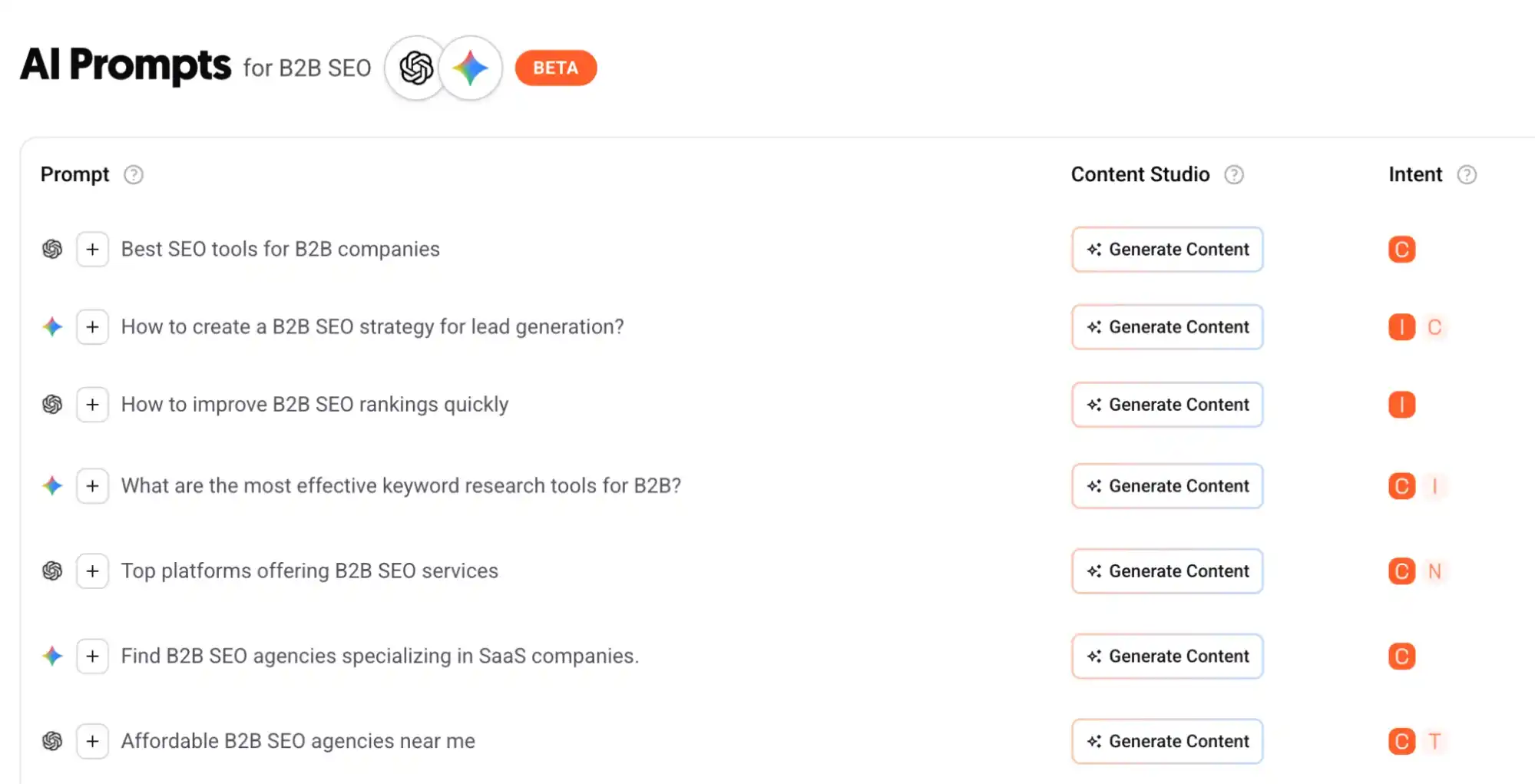
Another reason I rate it highly is that, unlike many everyday SEO tools, AnswerThePublic also gives you useful keyword data across other platforms, not just Google.
You can explore terms across places like YouTube, Bing, Yandex, and, as I mentioned, AI search engines too.
For me, that makes it one of the best tools for B2B keyword research, especially when you want to go beyond the same filtered keyword lists everyone else is using.
Use YouTube Suggestions to Spot Topic Demand
YouTube is the second-largest search engine. I’m sure that at least once, you’ve gone there to search for your favorite videos, movies, songs, or maybe just a tutorial to learn something quickly.
But if you pay a bit more attention while typing, you’ll notice something useful. Before you even finish the full search, YouTube starts suggesting keyword ideas and topic variations.
See the example below:
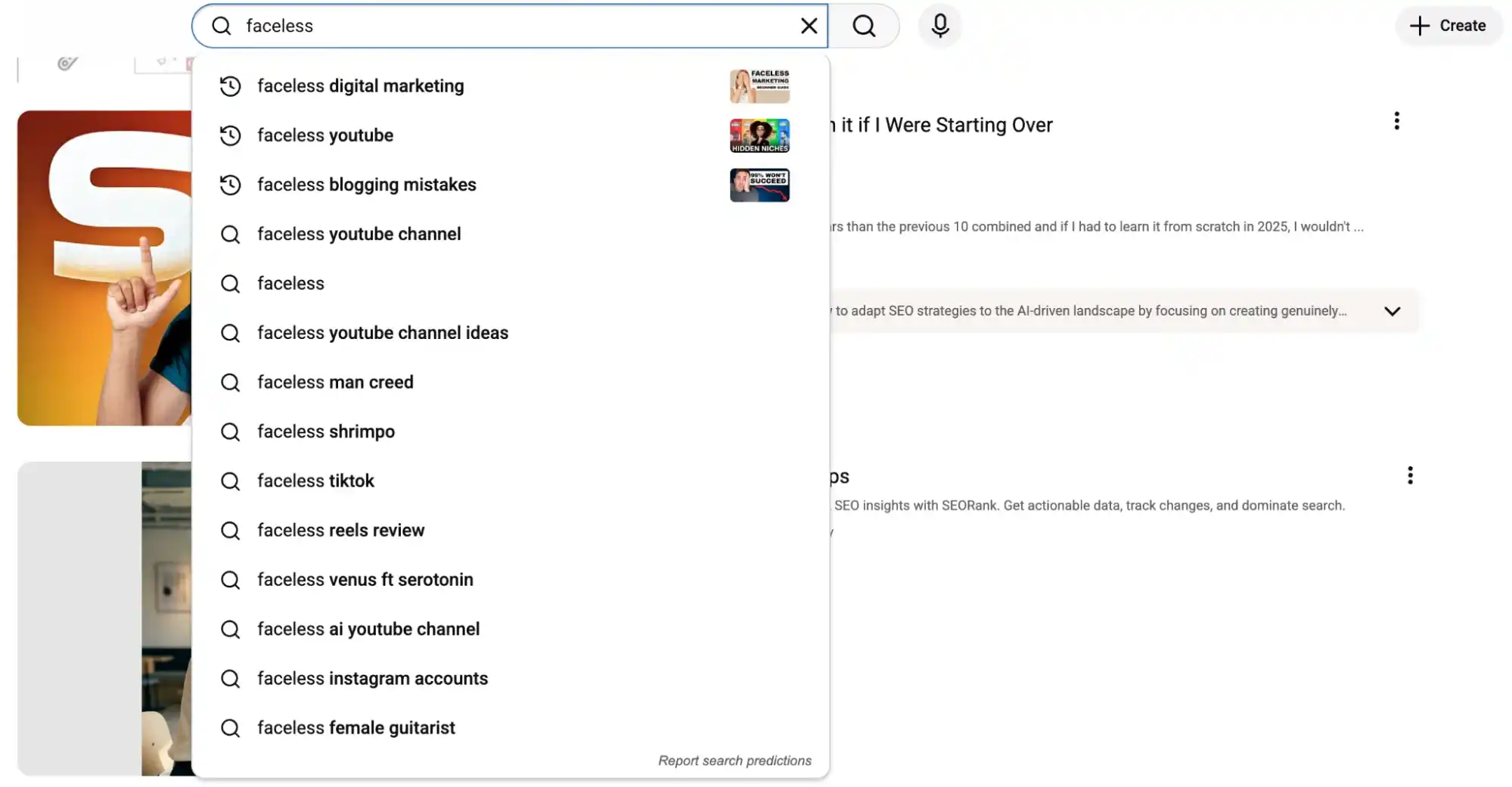
That is another simple opportunity you can grab very quickly.
This is not a technique I would call 100% B2B-specific, but it can still be very useful for B2B keyword research.
I personally use it a lot, especially for niche-specific businesses where there are not hundreds of obvious keywords to target.
It is also a good way to understand how people phrase their searches.
In many cases, the language you see there feels more natural, more direct, and closer to what users type.
Check SERPs ( “People Also Ask”, and “People Also Search for ” Sections)
This is probably one of every SEO’s favorite keyword research techniques, and I’m definitely not an exception. No matter the industry or business model, I’m almost always able to find opportunities here that I would not have discovered through traditional ways.
What I mean is…
First of all, this is where Google itself starts giving you extra clues. Sections like “People Also Ask” and “People Also Search For” can reveal related queries, follow-up questions, and long-tail variations that many SEO tools either do not show at all or report with zero search volume.
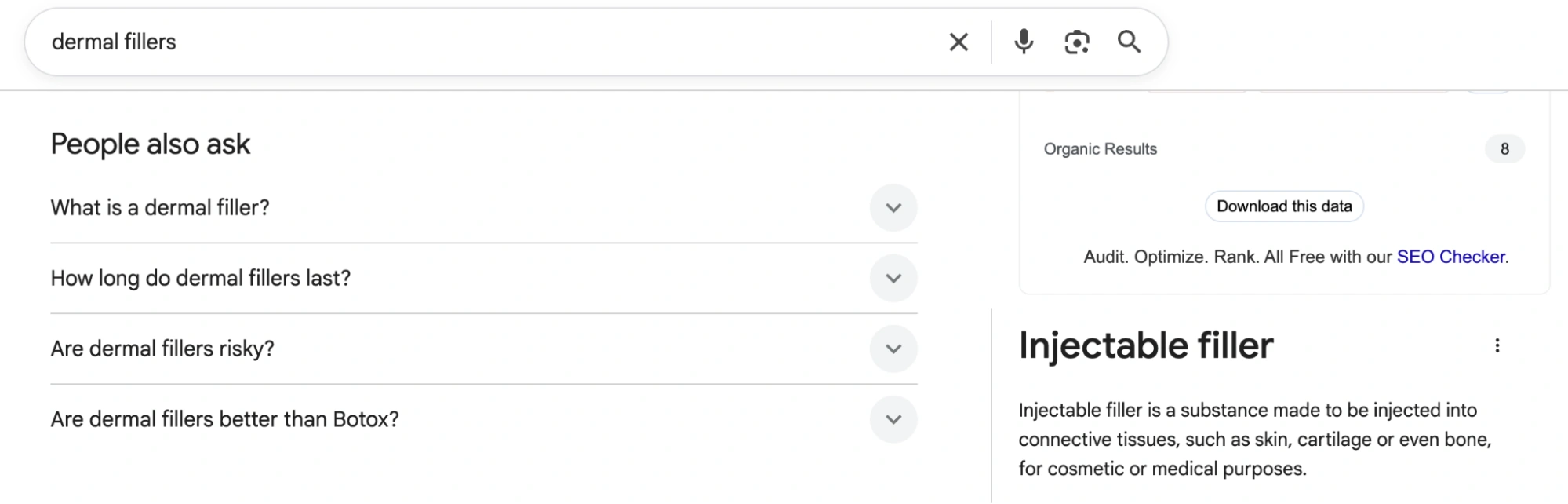
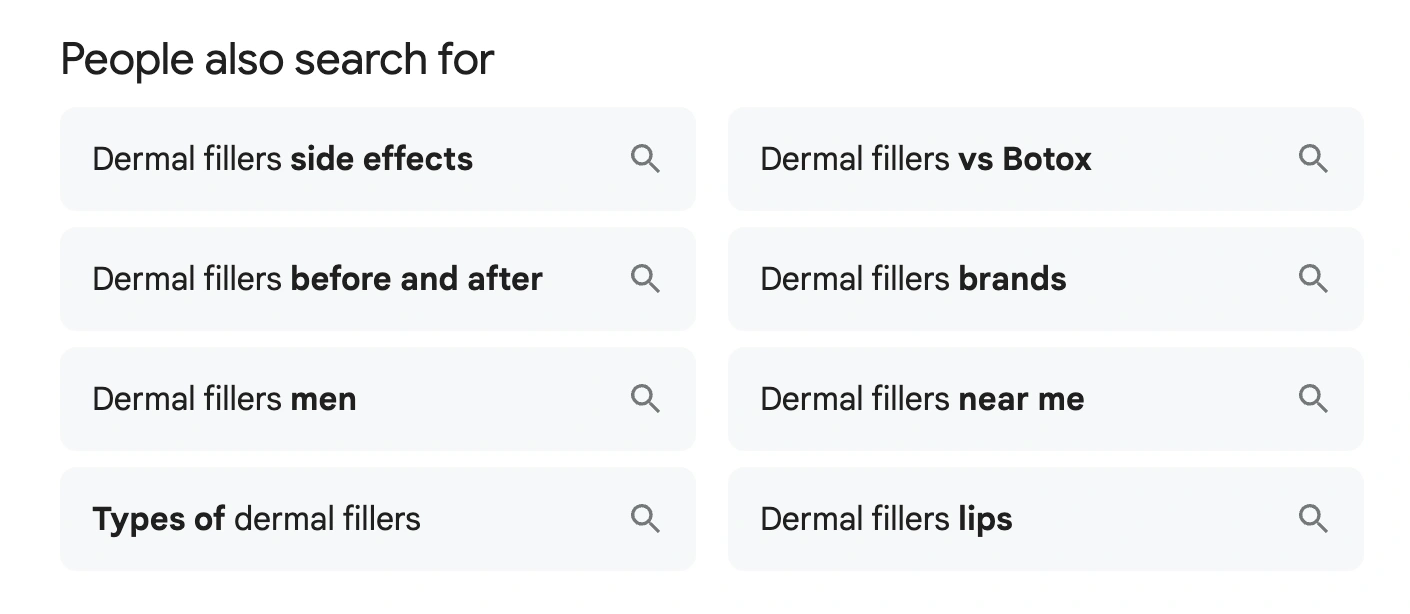
IMO, this is a very useful technique when you want to find long-tail content opportunities or search terms that make strong business sense, especially from a value perspective.
Personally, our agency uses this in keyword research almost every single time, regardless of the industry.
It is one of those methods that keeps giving useful ideas, even when the niche looks limited.
Pro tip here: I would not recommend cross-checking every one of these keywords in SEO tools. In most cases, you will just get disappointed because many of them will show little to no search volume.
However, that does not mean they are useless. In reality, some of them are the best opportunities you should not ignore.
Use Amazon.com’s Data
I know what you may be thinking, but it is probably not what you think. A few years ago, our team worked on an eCommerce SEO project for a store that sold dog collars.
One of our tasks was to find as many collection page opportunities as possible, including keyword angles based on color, style, use case, and other filters.
We started the research in the usual way and, by using different keyword research techniques, including some of the ones I already mentioned above, we found more than 20 opportunities.
That was already a good start. But as a final push, we decided to go one step further and use Amazon.com data as well.
We could uncover even more angles we could use. So instead of just talking about the theory, let me show you how this works.
Run Amazon.com through Ahrefs or SEMrush (In our case, it’s Ahrefs). Next, go to the top pages and apply the following filters
- Target keywords you want to filter (E.g., dog collars)
- KD and keyword volume (KV)
- Target country
- Etc (Based on the requirements)
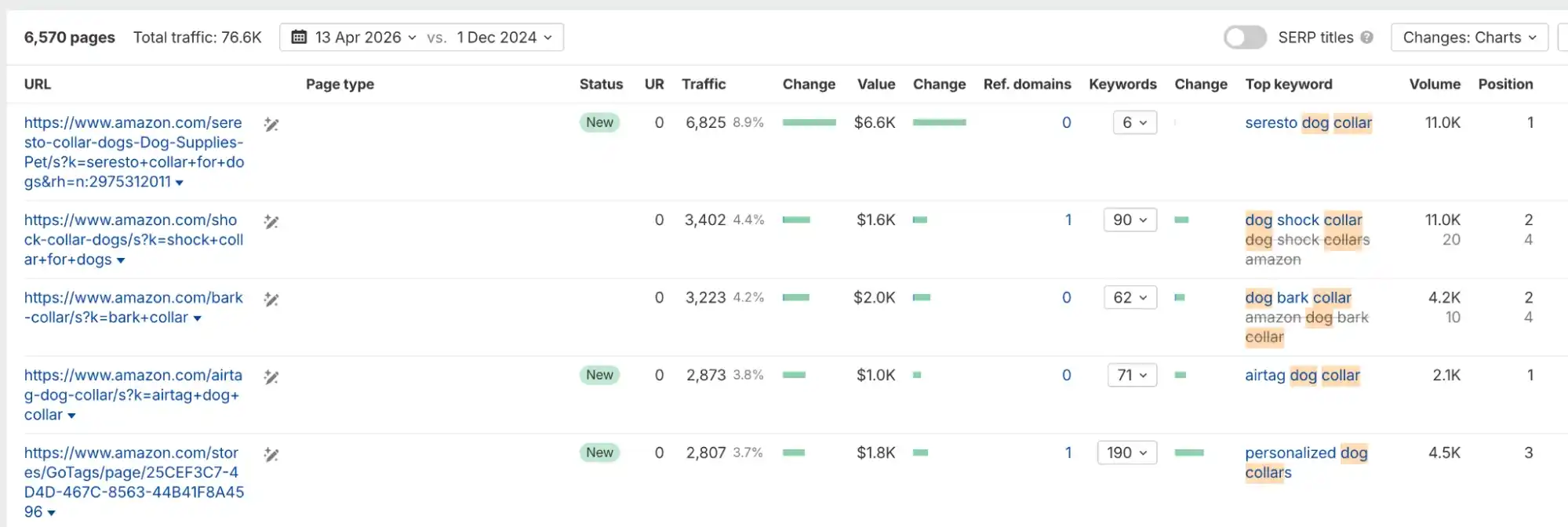
As you see, we found 6k+ keyword variations that contain the terms “ Dog ” and “ Collar ”.
Of course, many of them are duplicates. So, next, you can just export the data, then import it to Claude or ChatGPT, and ask it to remove the duplicates or canonicalized variations.
In my opinion, this is a non-standard keyword research technique, especially if you’re running B2B eCommerce SEO campaigns.
Grab GBP’s Data (For Local Businesses)
Of course, this technique does not apply to every business, especially national or fully global ones. But if you are a local business, and especially running an SEO campaign for a local B2B business, I believe this can help you find dozens, and sometimes even hundreds, of keyword opportunities that can lead to much higher-ticket sales when you target them the right way.
I’m talking about your Google Business Profile data. If your profile is already set up, you can go into the performance report and review the top keywords that are driving visibility and visits from local pack results.
For example, in one of our B2B healthcare SEO campaigns, we saw keywords inside Google Business Profile that had little to no reported search volume in common SEO tools, but in reality, they were still bringing real visibility, clicks, and local intent traffic to the client’s website.
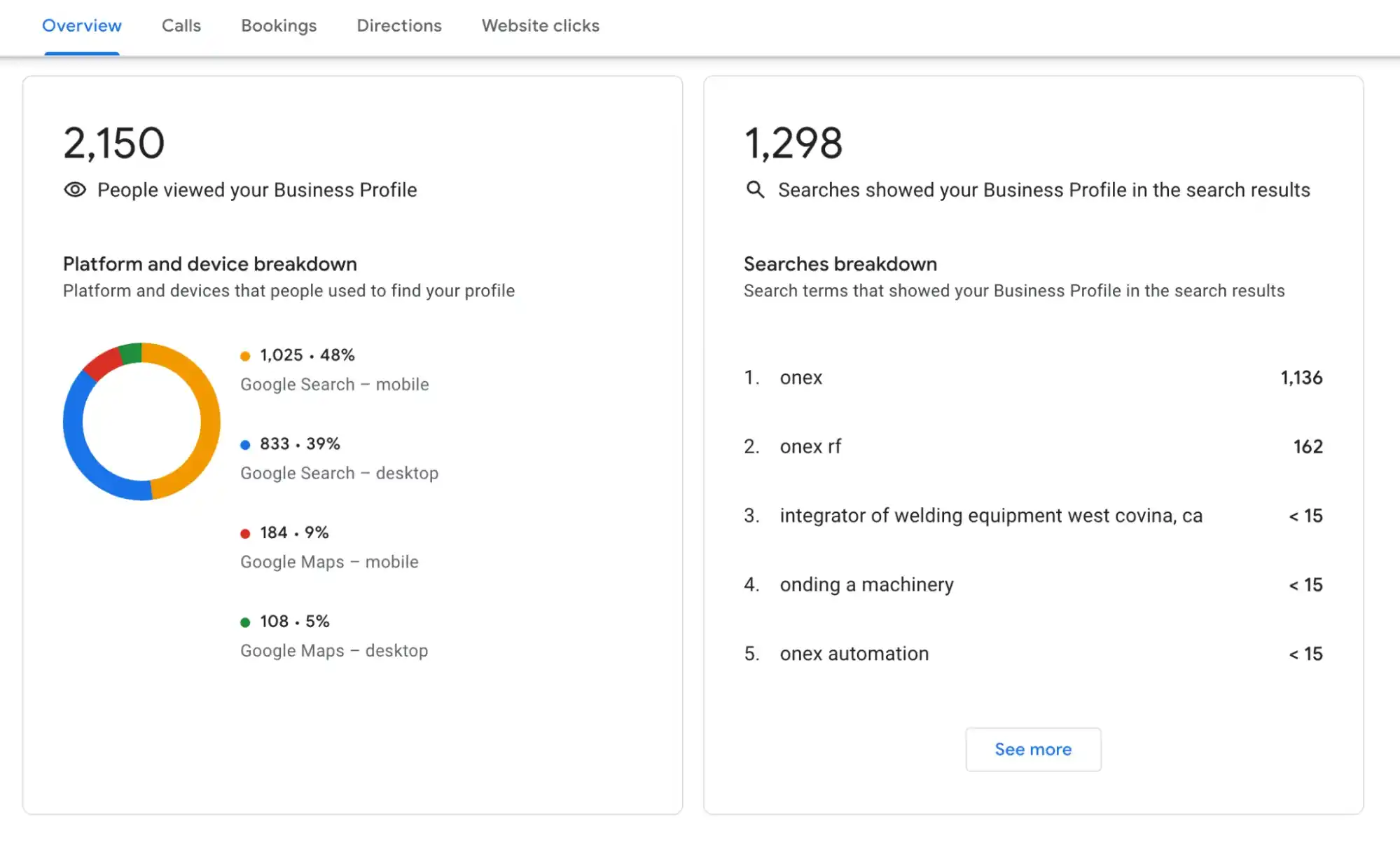
That is why I see this as an advanced keyword research technique rather than just an SEO reporting feature.
So if you are a local business, and especially if you operate in the local B2B space, I highly recommend checking your Google Business Profile performance data. There is a good chance you will find keyword opportunities there that you would have completely missed elsewhere.
Explore Quora and Reddit for Buyer Language
I always say some of the best keyword opportunities are hidden in forums. This is where people go when they cannot find a clear answer in regular Google search results, and sometimes even when AI tools give them generic replies. They go there because they want honest experiences, opinions, and answers from people who have dealt with the problem.
Platforms such as Quore or Reddit help you see how buyers, decision-makers, employees, or researchers describe their problems in their own words.
For example, instead of searching for something broad like “CRM software,” a person on Reddit may ask, “What’s the best CRM for 2026 (with AI and automation in mind)? ”
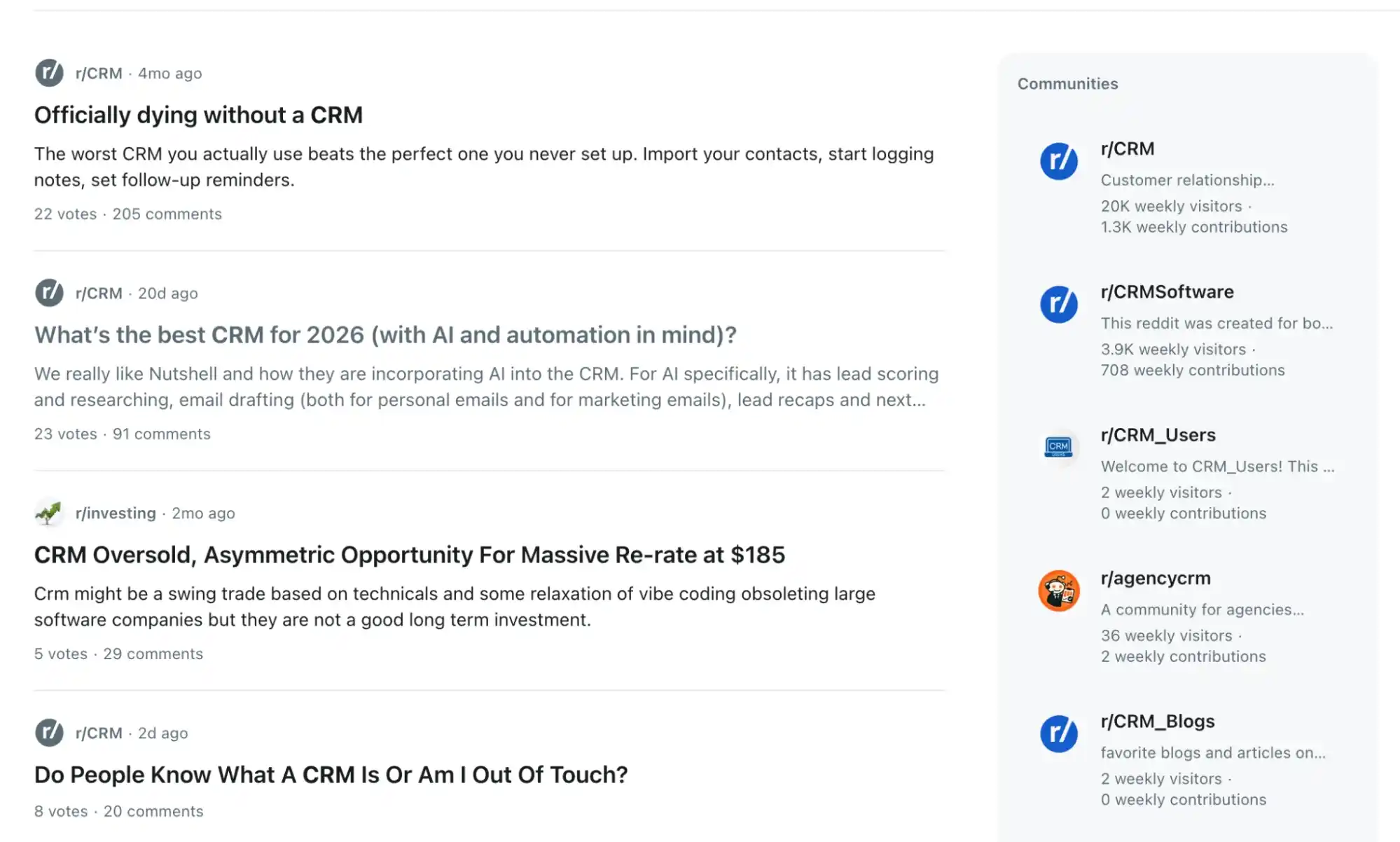
Just one discussion alone can give you several keyword angles, content ideas, pain points, and wording patterns you can use in your strategy.
One good practice here is not to look only at the main question. Read the replies too.
In many cases, the gold is in the comments. You can find objections, frustrations, comparisons, and buyer language that can help you uncover much stronger keyword opportunities than a basic tool export ever will.
Use Explodingtopics.com to Catch Early Trends
Exploding Topics is a trend discovery platform that helps you spot topics before they become obvious. The platform says it identifies emerging trends early by analyzing millions of data points, and it is built around the idea of finding demand before everyone else starts covering it.
It also positions itself as a way to discover trends roughly 12 months or more before they go mainstream.
So, instead of waiting until a term is already crowded inside Ahrefs or SEMrush, you can use a platform like this to spot where attention is starting to build.
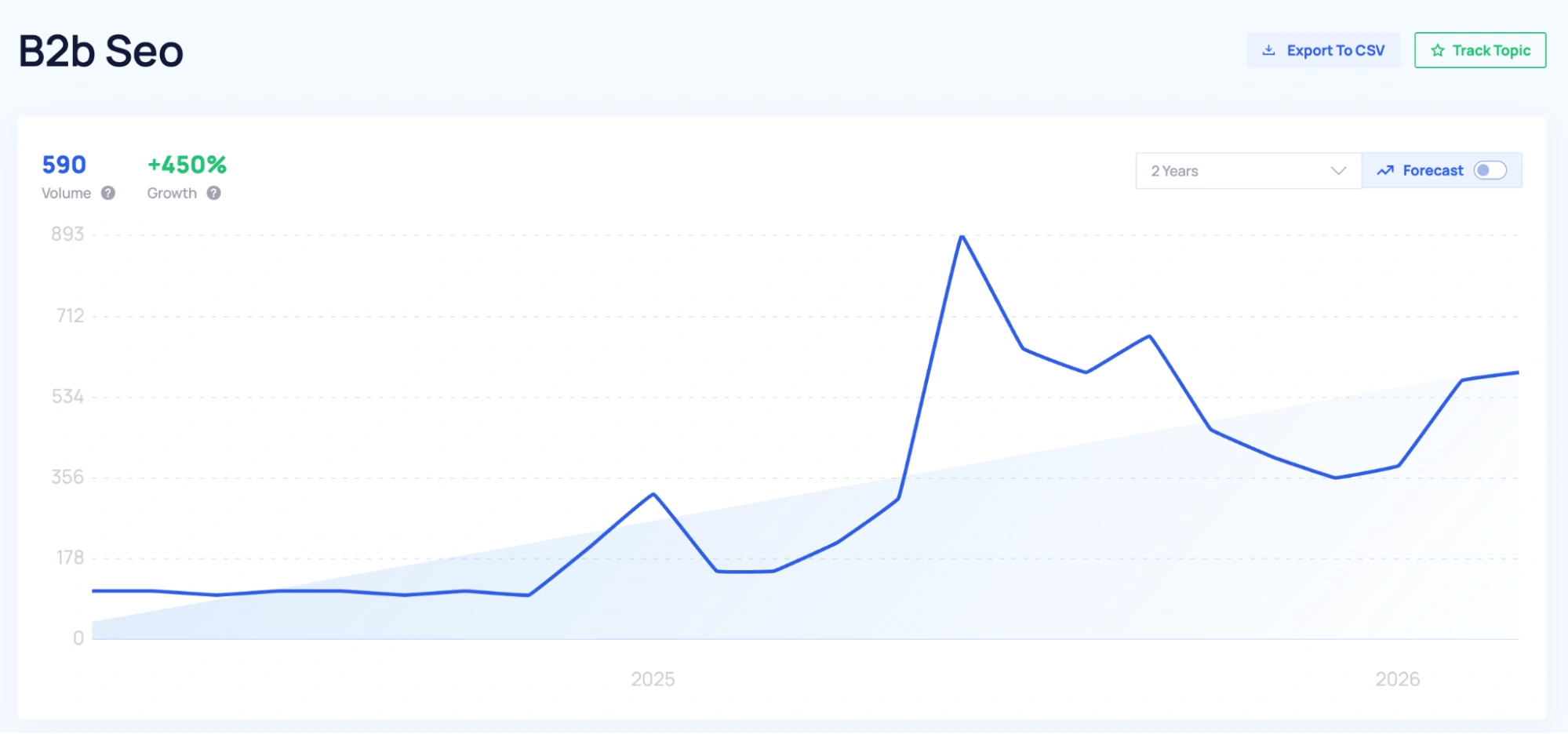
That’s a great way to create pages, articles, landing pages, or even service positioning earlier, before the competition becomes too heavy.
I think that’s even more valuable in B2B SaaS SEO. In SaaS, trends matter a lot because categories, features, integrations, workflows, and even buyer language can shift pretty fast.
If you catch those shifts a few months early, or sometimes even much earlier, you can develop your B2B SEO content strategy around them before the rest of the market fully reacts.
Review Google Search Console Data
I’m pretty sure most of you open Google Search Console and check clicks, traffic, and overall performance all the time. But in reality, some of the best low-hanging fruit are not hidden in the clicks. They are hidden in the impressions.
Let me explain what I mean. When you go into Search Console and review pages that got a small number of impressions in the last 24 hours, 7 days, or another short period, but no clicks, you can often find very interesting keyword opportunities.
In many cases, Google is already testing your pages for specific searches, even when the page does not directly target those exact terms.
That is where things get interesting.
Sometimes your page appears for long-tail or niche-specific keywords simply because Google sees some level of relevance. That alone can give you strong ideas for what to improve, what to expand, and what new keyword angles you may be missing.
Real Results, Real Growth
See How We Drove +412% Organic Traffic in 6 Months
What I like to do next is export that data and review it more deeply. Once you pull those keywords into a proper sheet or analysis workflow, it becomes much easier to spot patterns, missed opportunities, and content gaps.
You can quickly see which keywords already trigger impressions, which pages have hidden potential, and where a few focused updates could turn visibility into clicks.
For B2B, especially, this is a killer keyword research technique. A lot of high-value B2B terms are very specific, and they do not always appear clearly inside traditional SEO tools.
But Search Console can quietly reveal that Google is already connecting your site with those searches.
Use Google Search Campaigns’ Data
If you are also running Google Ads (Google Search campaigns), this can become another very strong keyword research source that many businesses do not use enough for SEO.
So, when you run phrase match or partial match campaigns, Google can show you the actual search terms and word combinations that triggered your ads.
The data is extremely useful because it comes from real searches, not just third-party estimates.
This is what I mean:
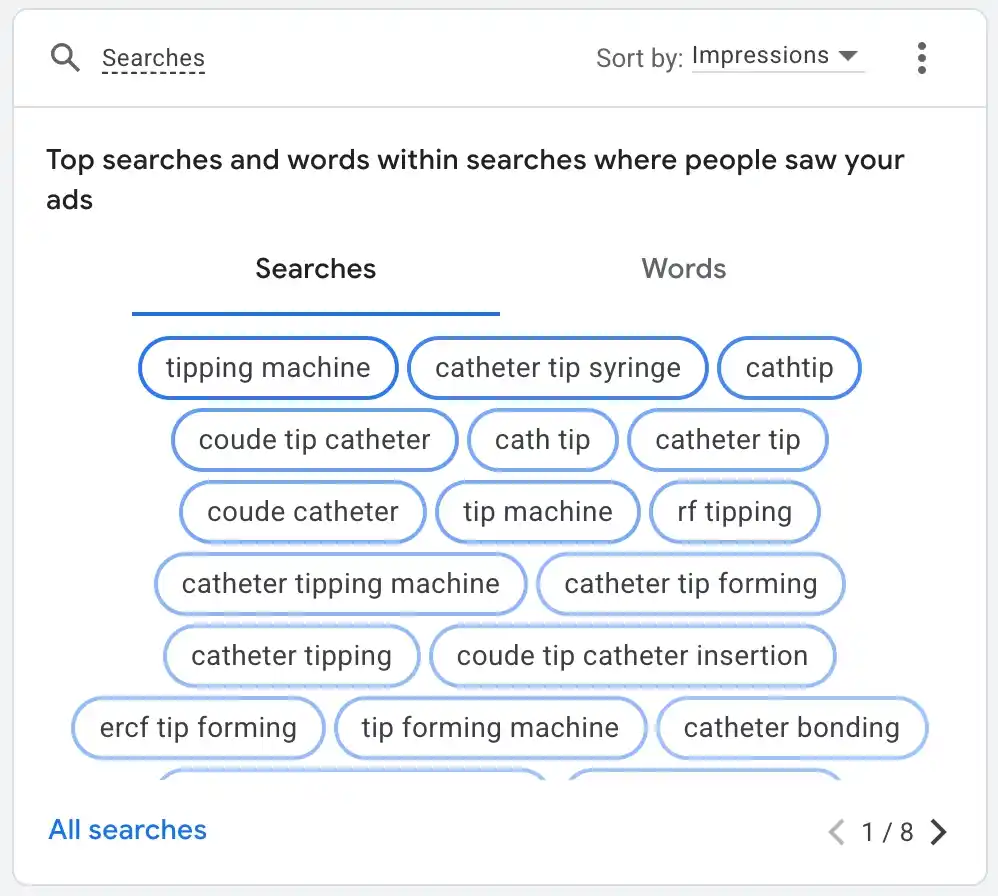
It is especially useful in B2B because buyers often search in very specific ways. They may include industry terms, software names, service models, locations, problems, or qualifiers that tools may not show clearly.
But inside your campaign data, those patterns can appear very quickly.
For example, you may launch a campaign around a broad service term, but then notice that people are repeatedly searching with more specific variations tied to company size, niche, use case, or urgency.
Use Pain-Point-Based Keyword Research
Sometimes, if you really know your industry well and understand what your buyers struggle with, you do not even need a tool to find strong keyword opportunities. You can quickly turn customer pain points into target pages and keywords.
I mean, instead of starting with any tool, start with the actual problems your prospects keep bringing up on sales calls, discovery calls, demos, support tickets, or emails.
For example, let’s say you sell software for warehouse and inventory operations.
A very specific pain point could be something like a stock mismatch between warehouse inventory and ERP records.
This pain point alone can turn into keyword angles such as “how to fix inventory mismatch between warehouse and ERP,” “warehouse inventory sync software,” or “ERP inventory discrepancy solution.”
Makes sense, right?
Keyword Research for International B2B
If you are running international B2B SEO campaigns, I would strongly recommend doing separate keyword research for each target language and market. If possible, work with a native speaker, local specialist, or an agency that understands that country’s culture.
Terminology, phrasing, buying language, and even the way people describe the same problem can change a lot from one language to another.
In B2B, the searches are often more specific, more technical, and more tied to industry jargon. A direct translation may be grammatically correct, but that does not mean it reflects how buyers search in that market.
I always say this, especially when it comes to B2B SaaS and similar sectors.
Many companies, especially those using platforms like Webflow and similar CMS setups, automatically translate everything, publish dozens of localized pages, and then wonder why nothing really happens.
So no, automatic translation is not a keyword strategy. If you want good results in international B2B SEO, you need local keyword research, local language understanding, and a much better feel for how the market searches.
By the way, I also have a very good guide on international B2B SEO, and I think you’d enjoy that one too.
B2B Keyword Research Tips and Best Practices
-
1
Some of the best B2B keywords never show strong volume
In B2B, a keyword with 20 searches can be more valuable than one with 2,000 if the buyer is serious. Low-volume terms often reveal niche problems, specific use cases, and high-ticket buying intent.
-
2
Commercial intent often hides behind plain language
B2B buyers don't always search with obvious words like “buy” or “pricing.” They may search for problems, workflows, compliance issues, vendor requirements, software comparisons, or operational challenges before they ever request a demo.
-
3
Good keyword research also looks at the SERP
The keyword alone doesn't tell the full story. Check what Google is ranking: blog posts, service pages, directories, comparison pages, product pages, or forums.
-
4
Not every good keyword should become a blog post
Some keywords deserve landing pages, comparison pages, use-case pages, feature pages, or sales enablement assets. Turning every keyword into a blog post is one of the fastest ways to waste good B2B intent.
-
5
A strong keyword list should help sales, not just SEO
The best keyword research gives your sales team better language, better objections, better use cases, and better insight into what buyers care about.
How to Prioritize B2B Keywords
At first glance, this part may look complicated, but in reality, it is much simpler than many people think. If you want to get the most ROI from your B2B SEO campaigns, you need to build the foundation the right way, and keyword prioritization is a big part of that.
I would usually start with profit potential. In simple words, ask yourself which keywords can realistically lead to leads, deals, or contracts that matter for your business.
The second thing I would look at is the connection between competition and your current SEO health. These two go together. If your website already has strong authority (Backlinks, reputation, etc), solid content, and a well-optimized SEO foundation, then of course, you can be more aggressive and target more competitive keywords.
But if your site is newer, weaker, or still far from where it should be, then it makes much more sense to go after long-tail, lower-competition keywords that still have strong business value and healthy profit margins.
Finally, you should understand whether the keyword is informational, commercial, or transactional, and where it fits in the buying journey.
In B2B, I would personally weigh this very carefully because intent often tells you whether the keyword is just nice to have or whether it can move someone closer to a call, demo, quote, or proposal.
Yes, there are many other points you can also take into account. This is one of those areas where “it depends” is true.
You may want to consider your sales cycle, service profitability, internal resources, content production capacity, current rankings, brand authority, market maturity, and whether the keyword can support one page or a full cluster.
In some cases, I also look at how naturally the keyword can connect to product-led content, case studies, comparison pages, or service pages.
So yes, SEO keyword prioritization depends on many things. But if I had to simplify it, I would say this: prioritize B2B keywords based on profit potential, competition versus your actual SEO strength, and intent.
-
1
Tracking volume without buyer context
High-volume keywords can look attractive, but many of them bring students, job seekers, beginners, or unqualified visitors. In B2B, a lower-volume keyword with budget and urgency behind it is often far more valuable.
-
2
Ignoring the sales cycle
B2B buyers don't usually convert after one search. Keyword research should cover awareness, comparison, internal approval, vendor selection, and final decision stages instead of only targeting obvious bottom-funnel terms.
-
3
Using generic SaaS or service keywords only
Keywords like “project management software” or “SEO services” are usually too broad and competitive. Strong B2B research goes deeper into industries, workflows, pain points, integrations, compliance needs, company size, and buyer roles.
-
4
Building keyword lists SEO can’t use
A spreadsheet with thousands of keywords is not a strategy. A useful B2B keyword list should be grouped by funnel stage, page type, priority, sales relevance, and the business problem each keyword supports.
The Bottom Line
In this guide, I tried to share B2B keyword research insights that my team and I have learned through hands-on experience, something you might not find in a 5 to 10-hour SEO course.
If you want to take your B2B SEO to the next level, keyword research is one of the first places you should get right. I believe it is the foundation of your entire strategy and, in many cases, plays a big role in the overall growth of your business.
If you are looking for a reliable partner, consultant, or agency you can trust without hesitation, you can also consider B2BSEO.io. We help B2B brands build SEO strategies that focus not just on rankings and traffic, but on business growth.
What Is B2B Keyword Research?
B2B keyword research is the process of finding the words and phrases businesses use when they search for products, services, or solutions online. The goal is to attract the right companies, decision-makers, and buyers.
What Types of B2B Keywords Convert Best?
The best-converting B2B keywords are usually specific, problem-focused, and close to action. These often include service keywords, comparison keywords, industry-specific terms, solution-based searches, and keywords that show clear buying intent.
Why Do Some High-Traffic B2B Keywords Fail to Convert?
Because traffic does not always mean the right audience. Many high-traffic keywords are too broad, too early in the buying journey, or attract people who are just looking for information, not ready to buy or book a call.
What Makes a B2B Keyword Commercially Valuable?
A B2B keyword becomes commercially valuable when it attracts the right type of buyer and has a strong chance to lead to revenue. Usually, that means the keyword is closely tied to a business problem, a solution, a service, or a buying decision.
Written by
Ashot NanayanSEO Strategist
Ashot Nanayan is an SEO strategist and the founder of B2BSEO.io. He helps B2B companies build search systems that do more than rank pages. His approach connects Google visibility, AI search presence, content depth, authority, and buyer intent, so brands appear where serious decisions start.