B2B eCommerce SEO: 24 Tips & Strategies from an Agency Owner

Ashot Nanayan
SEO Strategist
Table of content
I started my career at a specialized eCommerce SEO agency, where I spent more than a year and a half working on 50+ projects, ranging from small local stores to enterprise brands and wholesale businesses. My portfolio is packed with wins and failures, along with countless tests and experiments, especially after the rise of AI search.
Our eCommerce SEO success rate is around 77.5%, which I believe gives me the right to share my experience with you.
So I decided to offer B2B eCommerce SEO services through our agency, and finally set aside the time to put everything I know into one place. In this guide, I want to share the B2B eCommerce SEO tips, strategies, and best practices that can help your store survive, grow, and compete in a market shaped by crazy competition and constant algorithm changes.
Ready to grow smarter?
Book a free 30-minute strategy call with our team. We'll audit your search visibility and build a custom action plan.
What is B2B eCommerce SEO?
B2B eCommerce SEO is the process of helping a business-to-business online store appear higher in Google, Bing, and AI search engines (E.g., ChatGPT or Gemini) when other businesses search for its products.
In simple words, it is SEO for companies that sell to other companies online.
For example, if a company sells office furniture in bulk, industrial parts, medical supplies, packaging materials, or wholesale skincare products, they want their category pages, product pages, and helpful content to appear when buyers search things like “buy wholesale office chairs,” “bulk packaging supplier,” or “medical gloves wholesale.”
A few clear examples of B2B eCommerce stores are Alibaba, Grainger, and Uline. These are all businesses that sell products online to other businesses, not to everyday individual shoppers.
B2B vs. B2C eCommerce SEO
The main difference is that B2B buyers usually search in a different way than regular consumers. They are often more careful, more technical, and more likely to compare suppliers, prices, minimum order quantities, shipping terms, and trust signals before they contact you or place an order.
In short, B2B eCommerce SEO is about bringing the right buyers to your store and helping them feel confident enough to request a quote, place an order, or contact your team.
Keyword Map
Product and category terms
Product, category, supplier, bulk, and industry terms
Content Gaps
Buying guides, reviews, comparisons
Use cases, industry pages, spec guides, procurement content
Conversion Paths
Add to cart, checkout, product recommendations
Quote forms, sample requests, account signup, sales contact
Tracking
Revenue, transactions, cart actions
RFQs, samples, accounts, leads, pipeline, repeat buyers
What Makes B2B eCommerce SEO So Challenging?
First of all, the products are often more complex. In many B2B industries, buyers care about technical details, bulk pricing, specifications, compatibility, certifications, shipping rules, and minimum order quantities.
Second, the search volume is often lower, but the competition is still serious. You may not see huge keyword numbers, but the traffic is very valuable because one good lead can turn into a large order or a long-term client.
Third, the buying journey is usually longer. A person buying for a company does not always make a fast decision. They may compare several suppliers, check product details, ask for approval from a manager, request a quote, and come back later.
So your B2B SEO strategy has to support every stage, not just the final purchase.
Finally (Based on what we see), another problem is that many B2B stores have messy websites. They often have thousands of products, weak category pages, copied manufacturer descriptions, filter issues, duplicate pages, and technical SEO problems that quietly hurt performance.
24 B2B eCommerce SEO Strategies for Driving Qualified Leads
Below, I’ve listed 24 B2B eCommerce SEO strategies and best practices based on our agency’s hands-on experience. I’ll keep everything as clear and practical as possible, with little to no jargon, so you can apply these ideas to your own store without overcomplicating the process.
1. Make Product Page UX Work Harder for SEO
I would not say product page UX is the number one ranking factor, but we are not living in the 1990s anymore. In B2B eCommerce, especially, your product pages should feel great, clear, and helpful. They should make it easy for search engines and buyers to understand what you sell and what the next step should be.
Here is an example of poor UX
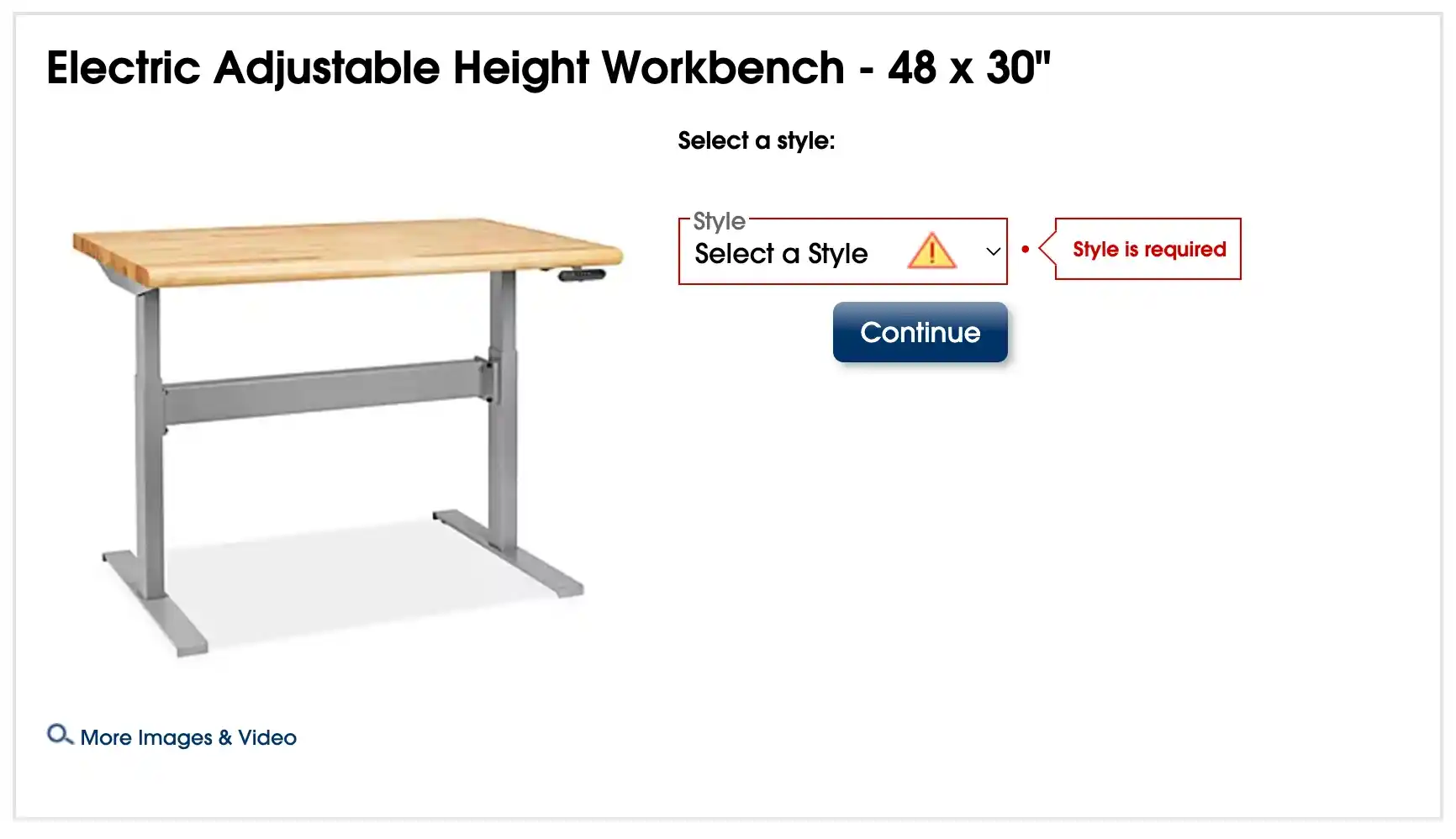
vs. great UX I would personally design for if it were my store.
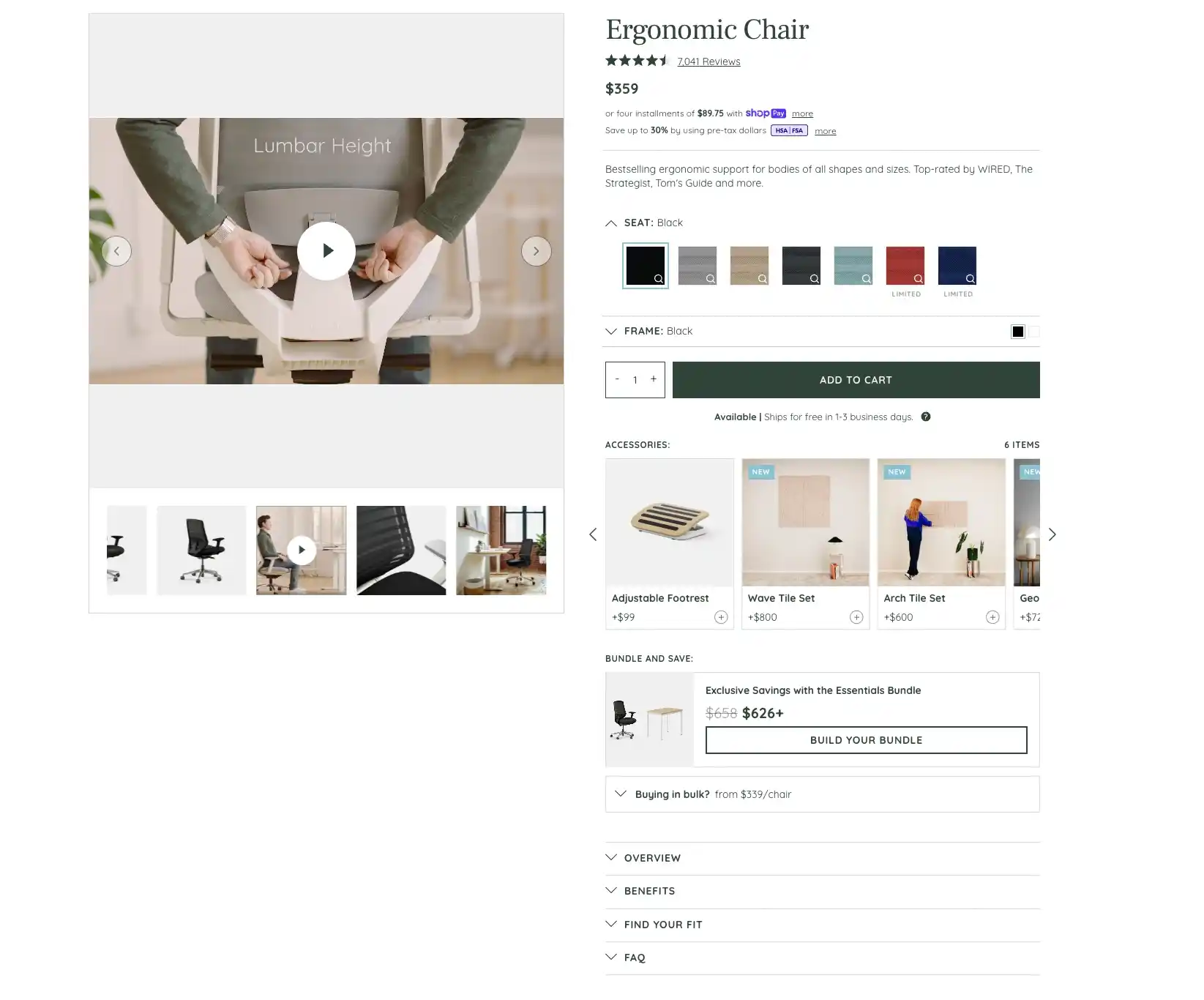
When I talk about strong product page UX, I mean the basics done really well.
Remember, the buyers are comparing suppliers, checking technical details, and looking for reasons to trust you.
I have always believed that when you build pages that help visitors, search engines usually find a way to reward that over time. Maybe that rule is not written anywhere officially, but it works, believe me.
Common Product SEO FAQs
2. Use PR-Driven Link-Building to Earn Trust at Scale
I have been in this industry for seven years or more, and honestly, few things disappoint me more than the state of link-building. A lot of what happens behind the scenes is the same old game: PBNs, link farms, automated outreach, irrelevant placements, and backlinks that look fine in an SEO report but do very little for businesses.
I believe serious B2B eCommerce brands need to think beyond traditional link-building techniques. In many cases, standard outreach alone is not enough.
You need links that build trust, strengthen your brand, and make your business look more legitimate in the eyes of search engines and potential buyers.
I am talking about earning placements, mentions, and links from well-known and trusted publications (Something that money can not buy), whether that is Forbes, The New York Times, Shopify, niche industry websites, or respected business publications in your space.
Based on our B2B link-building agency‘s experience, there are only a few reliable ways to earn PR links. One is HARO-style link-building. Another is digital PR.
A third is creating linkable assets, such as free tools, original data, useful guides, or pages people naturally want to reference.
But if you ask me what I would strongly recommend for a B2B eCommerce brand that wants to grow the right way, it is: invest in digital PR and HARO-style campaigns. It may take more effort, more patience, and usually a better strategy, but over time, these are the links you are far less likely to regret.
3. Improve Your Visibility Across AI Search Engines
I know everyone is suddenly selling AI SEO services: ChatGPT SEO, Gemini SEO, Claude SEO, Perplexity SEO; every week, there seems to be a new label for it. But you do not need to overcomplicate it.
If there is one piece of advice I can give you that will save you time, money, and a lot of confusion, it is this: good AI SEO starts with good traditional SEO.
If your website is weak, your pages are thin, your brand is barely mentioned anywhere, and your content is not useful, no “AI SEO package” is going to save you.
What works best in AI search is usually a combination of strong traditional SEO and a few extra practices that make your content easier for AI search engines to understand, trust, and reference.
So before you chase every new SEO trend, get the basics right first. Then build on top of that with methods that improve your visibility across AI-driven search experiences.
Below are some of the most important best practices I would focus on if you want to improve your overall visibility across AI search engines.
AI Visibility Best Practices for B2B eCommerce Brands
Practical ways to make your products, categories, and brand easier for AI tools to find, understand, and recommend when B2B buyers compare suppliers.
-
1
Build comparison pages
B2B eCommerce buyers use AI tools to compare suppliers, platforms, product categories, pricing, and alternatives. Create strong comparison pages that clearly explain where you fit, who you serve, and why buyers should consider you.
-
2
Strengthen product-level detail
AI tools need clear product information to understand and reference your catalog. Add specs, use cases, materials, compatibility, certifications, bulk order details, shipping terms, and FAQs to important product and category pages.
-
3
Earn mentions in industry lists
Try to appear in “best suppliers,” “top distributors,” “best B2B eCommerce companies,” and niche product listicles. These third-party mentions help AI systems connect your brand with the right category.
-
4
Use schema properly
Add structured data for products, reviews, FAQs, organization details, breadcrumbs, and pricing when relevant.
-
5
Create decision-stage content
Don’t only publish educational blog posts. Build pages around buyer questions like “best product for X use case,” “bulk pricing,” “supplier comparison,” “wholesale vs retail,” and “how to choose a vendor.”
-
6
Improve brand authority signals
AI visibility is not only about your website. Strong backlinks, PR mentions, reviews, case studies, author profiles, and consistent brand information across the web make your business easier to trust and recommend.
Here are some tips and best practices from other industry experts (Stuff I personally agree with).
Aleyda Solís, Founder of Orainti – One of her strongest points is that companies make a mistake when they treat AI search as either completely separate from SEO or the same as SEO.
She says the core pillars still apply, but AI search needs different goals and metrics, including brand mentions, sentiment, citation share, traffic, assisted conversions, and platform-specific visibility. She also warns against obsessing over static prompts from tools because real AI usage is conversational and context-driven.
Nathan Gotch, Co-Founder at Rankability – He is also saying things that line up with what many practitioners are seeing. His strongest recurring point is that he still has not seen a brand do well in AI search without also doing well in traditional SEO, and he says there is “no successful GEO or AEO without effective SEO.”
He also says attention is now spread across platforms like Google, YouTube, ChatGPT, and Reddit, so brands need to go where users are.
4. Create Content That Helps Buyers Choose Faster
I would not say every B2B eCommerce store needs to publish hundreds of blog posts about random topics like “what is this” or “what is that.” But I do believe strong, human-first content is still very important, especially in SEO.
But of course, a lot has changed since the rise of AI search engines and AI Overviews.
You should focus first on content that supports buying intent. In most cases, that means BOFU, which helps people compare options and move closer to a decision.
Here is types of BOFU content for B2B eCommerce with a percentage to convert:
As I said, this works well not only in traditional search but also across AI search engines, where buyers often look for quick summaries, recommendations, and side-by-side evaluations.
Based on what we have seen ourselves, strong informational content can improve your topical authority and help Google understand that you know your space.
It shows that you understand the industry, the problems buyers face, and the products you sell.
I also have a dedicated guide on B2B SEO content strategies, where you will find a lot of insightful data.
Pro Tip: Write for people first, then make it easy for search engines to understand. Create something real, well-researched, and useful. Use examples, real data, tables, insights, and clear explanations.
Put yourself in the reader’s shoes and ask one honest question: would you stay and read this, or would you leave and look for a better page?
5. Invest in Product Page SEO
A lot of stores pay more attention to collection or category pages because the search volumes of the target keywords usually look bigger. However, based on our own experience and the data we see, product pages often generate much stronger intent and better conversion rates than broad collection pages.
It’s especially more important if you are in a niche where you only have a limited number of products.
Let’s say you sell office pods and your store has 5, 10, or maybe 15 core products. If those pages do not rank, your growth opportunities become much smaller.
In a setup like that, every single product page can represent a serious revenue opportunity.
Here is the anatomy of a well-optimized product page:
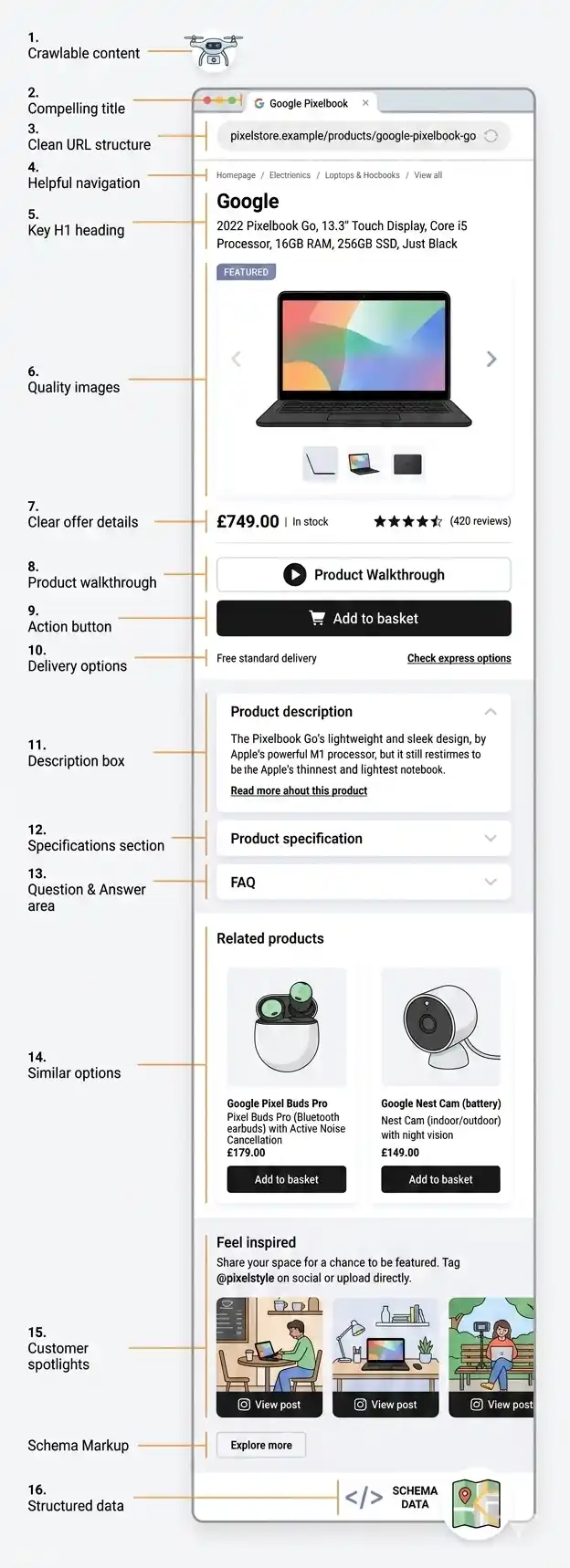
Instead of putting all your attention on category pages, make sure you also invest in product page SEO.
Remember, my friend, a well-optimized product page can generate qualified traffic, help buyers feel more confident, and turn one page into a consistent source of leads or sales.
6. Don’t Let Technical SEO Quietly Limit Growth
I don’t want to turn this guide into a full technical SEO guide for beginners, but I do want to highlight a few of the most important checklists I believe eCommerce brands should pay attention to.
First, take a close look at your robots.txt file. Make sure you are not allowing unnecessary pages, such as filtered pages, checkout pages, cart pages, and other low-value URLs to waste crawl budget.
Here is an example of a Robots.txt file for an eCommerce store you can copy quickly:
gdrgrdg
User-agent: *
Disallow: /cart/
Disallow: /checkout/
Disallow: /account/
Disallow: /login/
Disallow: /register/
Disallow: /wishlist/
Disallow: /search/
Disallow: /*?sort=
Disallow: /*?filter=
Disallow: /*?price=
Disallow: /*?color=
Disallow: /*?size=
Disallow: /*?sessionid=
Disallow: /*?utm_

Allow: /products/
Allow: /collections/
Allow: /categories/
Allow: /blog/

Sitemap: https://www.example.com/sitemap.xml
Next, make sure your filtered URLs are handled properly. In many cases, that means pointing canonical tags back to the main category or main product page.
If you ignore this, you can easily face duplication issues and a lot of wasted crawl budget.
You also need to decide how your product variants should be handled. For example, if you sell products in different colors, sizes, or configurations, you should be clear about whether those deserve separate indexable pages or whether they should simply exist as non-indexed variations under one main product.
The decision should depend on search demand, keyword opportunity, and how people search for those variations.
By the way, I have a very detailed B2B keyword research guide for you. Explore it next to make the right decisions.
More broadly, pay attention to the crawl budget.
It’s very important in eCommerce because websites can generate a huge number of unnecessary URLs without the owner even noticing.
You can get useful clues about this in Google Search Console, especially when you start looking at which pages get crawled, which ones get indexed, and where Google may be spending time on pages that don’t deserve it.
So, this is the core technical checklist I would prioritize for eCommerce stores.
7. Use Internal Links to Push Authority
One of the simplest eCommerce SEO best practices is to connect your products and categories to each other. For example, on a product page, you can include sections like related products, alternatives, similar items, frequently bought together, or other relevant suggestions.
On category pages, you can also guide users toward subcategories, featured products, or closely related collections to help users discover more of your catalog, while helping search engines understand the relationships between your pages.
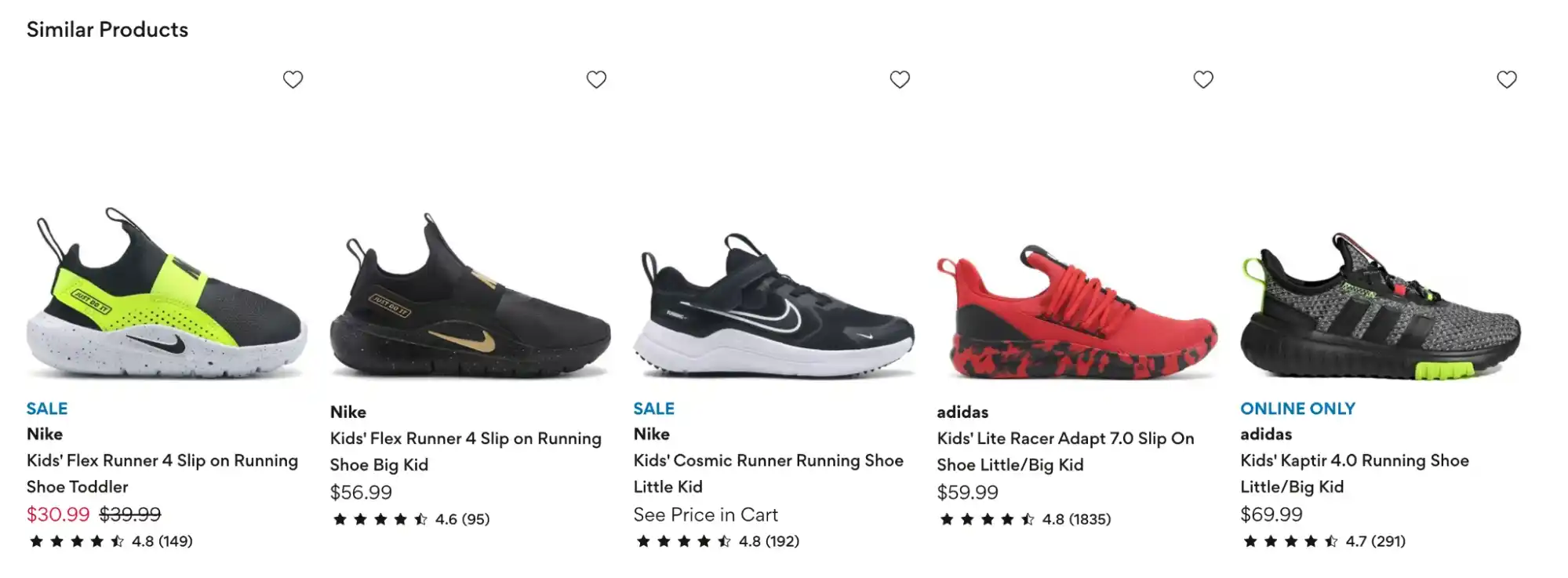
But one tactic I personally like even more is using internal links to pass authority from strong content pages into your most important commercial pages.
Let me explain what I mean.
Sometimes, direct link-building to product pages or category pages can look forced or unnatural.
In eCommerce, it is easier and more natural to earn backlinks to helpful blog posts, comparison pages, listicles, guides, or other informational content.
Those pages attract links more easily because people are more comfortable referencing useful content than linking straight to a commercial page.
If you already have blog content or resource pages with strong backlinks, use those pages strategically. Link from them to your key product pages, category pages, or other high-value commercial URLs.
It’s a great way to give you a cleaner and more natural way to support the pages that actually drive leads and revenue.
8. Create Free Tools (If Applicable)
I really wish I had taken this strategy more seriously six or seven years ago. I probably would have built a lot more of them by now.
But jokes aside, free tools are incredibly great for B2B eCommerce SEO when they are closely tied to your product, your industry, or the problems your buyers deal with every day.
The good part is, not every tool has to be some huge technical product with API costs, dashboards, and endless maintenance.
In some cases, a simple calculator, estimator, selector, planner, or comparison tool is more than enough.
For example, you can build tools such as “wholesale price calculator,” “shipping calculator,” or “pallet calculator.”
Then, on your tool pages, you can advertise your main products and turn visitors into leads.
9. Create Product Videos
Product videos are one of those things I would never call a direct ranking factor, but I still believe they are very important in B2B eCommerce.
Over the years, I noticed that search engines often seem to respond well to product pages that offer richer content, and videos are a big part of that.
IMO, a good product video can solve a lot of problems at once. It can show the product from different angles, explain features more clearly, answer small questions before they become objections, and help buyers understand what they are getting.
In B2B, especially, where products are more expensive, more technical, or harder to explain with a few images and short paragraphs, that extra opportunity of clarity is very valuable.
How does it help SEO?
It gives visitors another reason to stay on the page longer and engage more with the content. When people spend more time on a page, interact with it, and don’t bounce right away, that usually sends a positive quality signal.
10. Create Separate Pages for the Industries You Serve
I mentioned the same idea in my B2B SaaS SEO guide, and honestly, I believe it works just as well for B2B eCommerce.
So, instead of relying only on one general category or collection page, you can create separate landing pages for the industries you serve. The product may stay the same, but the way different industries think about it, use it, and search for it can be very different.
For example, let’s say you sell office pods. You do not necessarily need one product for law firms, another for healthcare clinics, and another for coworking spaces.
The same pod may work for all of them.
But the messaging, pain points, and buying reasons are different, right?. So instead of forcing all of that into one broad collection page, it often makes more sense to build separate industry pages around those use cases.
Industry pages can help you target more specific, high-intent keywords that are often easier to rank for and more likely to convert.
In many cases, going after a phrase like “office pods for law firms” or “office pods for healthcare clinics” gives you a better chance than trying to win everything with one broad page targeting a generic keyword.
11. Use Spec-Driven Keyword Targeting
In very simple words, spec-driven keyword targeting means creating pages around the exact product details buyers are already searching for.
In B2B, people often don’t search in broad, casual ways. They search with specifics. That could be size, material, capacity, thickness, voltage, weight, compatibility, pressure level, certification, or some other technical detail.
For example, if you sell packaging materials, a buyer may not just search for “bulk plastic containers.” They may search for something much more specific, like “32 oz plastic containers wholesale” or “food grade plastic containers with lids bulk.”
It is more detailed, more intentional, and usually much closer to a buying decision, and if you want to get the highest B2B SEO ROI from this, you should not ignore this strategy.
Here is another example to make it even clearer.
Let’s say you sell commercial air filters. A general keyword would be something like “industrial air filters.”
But a spec-driven keyword could be “MERV 13 air filters 20x25x4 bulk” or “HEPA air filters for clean rooms.”
This is one of the best B2B eCommerce SEO strategies because B2B buyers are often much more precise than regular shoppers, and for our client, it works pretty well.
By the way, if you are looking for a B2B SEO agency that understands how to build this kind of strategy properly, B2BSEO.io is the right fit.
12. Pair Structured Data With Merchant Center Feeds
As we know, structured data is the code you add to your product pages to help Google understand what the page is about. If you need more details, check out Google’s office document.
Merchant Center, on the other hand, is Google’s platform where you submit your product data in a feed. The feed is basically a file or connection that sends Google your product information at scale, such as titles, prices, availability, images, and other shopping data.
Google also says supported structured data on your landing pages helps Merchant Center retrieve up-to-date product information directly from your site.
So why pair them? Because they work better together.
Your structured data helps Google understand the product directly on the page, while your Merchant Center feed gives Google a broader product data source across your catalog.
When both are in place and consistent, you make Google’s job easier, reduce confusion, and give your products a better foundation for shopping visibility. That is especially useful for price, availability, shipping, variants, and other details that matter in eCommerce.
Here is a clean example
"@context": "https://schema.org/",
"@type": "Product",
"name": "ErgoMesh Executive Office Chair",
"image": [
"https://example.com/images/ergomesh-chair-black.jpg"
],
"description": "Commercial-grade ergonomic office chair with mesh back, adjustable lumbar support, and 300 lb capacity.",
"sku": "EM-CHR-BLK-001",
"brand": {
"@type": "Brand",
"name": "WorkCore"
},
"gtin13": "1234567890123",
"offers": {
"@type": "Offer",
"url": "https://example.com/products/ergomesh-executive-office-chair",
"priceCurrency": "USD",
"price": "329.00",
"availability": "https://schema.org/InStock",
"itemCondition": "https://schema.org/NewCondition"
}
}
Matching Merchant Center feed entry
id: EM-CHR-BLK-001
title: ErgoMesh Executive Office Chair
description: Commercial-grade ergonomic office chair with mesh back, adjustable lumbar support, and 300 lb capacity.
link: https://example.com/products/ergomesh-executive-office-chair
image_link: https://example.com/images/ergomesh-chair-black.jpg
availability: in_stock
price: 329.00 USD
condition: new
brand: WorkCore
gtin: 1234567890123
For example, if your product page says the chair costs $329, is in stock, and has GTIN 1234567890123, your Merchant Center feed should say the same thing.
People often use “schema markup” as a broad term for all structured data, and that is basically fine. But in practice, when I say pair structured data with Merchant Center feeds, I specifically mean your product-related structured data on the page plus your product feed inside Merchant Center.
So it is not really one replacing the other. It is more like two systems supporting the same goal from different angles.
13. Strengthen Site Hierarchy With Breadcrumbs
Breadcrumbs are the small navigation links you usually see near the top of a page. They show users where they are within the website structure.
For example, something like this:
Home > Office Furniture > Office Chairs > Ergonomic Office Chair
That is a breadcrumb.
It may look like a very small detail, but in eCommerce, it is very useful. Stores often have many categories, subcategories, and product pages, so breadcrumbs help people understand where they are, how the page fits into the bigger site structure, and how to move back to broader sections without getting lost.
It’s not a ranking factor, but it’s great for user experience. They make the site feel more organized, more intuitive, and easier to browse.
If you are using WordPress, Shopify, or a similar CMS, there is a good chance breadcrumbs are already available by default or can be added very easily through your theme, built-in settings, or an SEO plugin. So in many cases, this is not even a hard thing to implement.
14. Design URLs for Scale From the Start
When a website is first built, the URL structure is often created for what the business has today, not for what it may look like in one, two, or three years. On day one, that may not seem like a problem.
But once the catalog grows, new categories are added, product lines expand, or the company starts targeting more use cases, industries, or subcategories, a weak URL structure can quickly become a headache.
That is what I mean when I say URLs should be designed for scale.
A lot of development teams or agencies build websites in a way that works only for the current stage of the business.
That is why I see this as a very important best practice, especially in eCommerce.
A scalable URL structure should feel logical, clean, and flexible. It should support future category growth, new product lines, and possible expansion into subcategories, industry pages, or filtered landing pages without forcing you to rebuild everything later.
15. Create “Bulk,” “Wholesale,” and “MOQ” Intent Pages Where Relevant
In many industries, buyers are searching with buying intent attached to it. Words like bulk, wholesale, MOQ, minimum order quantity, case pack, volume pricing, or supplier often completely change the meaning behind the search.
If your store sells in larger quantities, supports wholesale pricing, or has minimum order requirements, you should not hide the information somewhere deep on the site and hope buyers figure it out.
In many cases, it makes sense to create dedicated pages around that intent and target those searches directly.
Remember
16. Add Quote-Request Paths to SEO Landing Pages
A lot of landing pages do a solid job of generating traffic, but then fail at the most important part: giving serious buyers a clear next step. In B2B, not everyone is ready to click “buy now.” Many people want to ask about bulk pricing, custom options, shipping, lead times, product compatibility, or contract terms before they move forward.
If your page doesn’t support such behavior, you can lose highly qualified leads even when the SEO side is doing its job.
For such scenarios, I recommend adding strong quote request paths to your key SEO landing pages, especially category pages, high-intent product pages, comparison pages, and other BOFU content.
Pro tip: Don’t rely on one generic contact button in the header. Add quote-focused calls to action inside the page itself, close to the points where buying intent naturally gets stronger.
If possible, make the quote request feel specific to the page the person is on. A generic “Contact us” form is fine, but a quote form tied to the exact product, category, or solution page usually feels much more natural and converts better.
17. Create Indexable Resource Hubs Around Repeat Questions
In many B2B industries, buyers keep asking the same questions again and again. You know, technical and practical stuff or stuff related to shipping, compatibility, setup, certifications, warranties, lead times, returns, customization, or minimum order quantities.
The thing is that you cannot always rewrite those answers in a unique way for every single product or category page. Sometimes the answer is just the answer.
That’s why I like the idea of building indexable resource hubs around those repeat questions.
I mean, maybe a help center, a knowledge base, a resource library, or whatever name fits your brand better.
I like this approach for two reasons.
First, it helps the main commercial pages stay cleaner. Instead of forcing the same long answers under every product or category. Second, these resource pages can generate extra traffic on their own.
18. Optimize for International or Regional Search Correctly
If you sell across multiple countries, ship to different regions, work with distributors in specific markets, or offer different pricing, product availability, languages, or policies based on location, then international or regional B2B SEO is very important.
Many stores lose a lot of potential just because Google was showing the wrong version of a page to the wrong audience.
A buyer in the UK visits a US page. A Canadian customer sees the wrong currency. A European buyer ends up on a generic page with no regional shipping details.
-
1
The basics
Make sure each country or regional version has a real purpose, such as different language, currency, shipping terms, catalog availability, compliance details, or local buying conditions.
-
2
URL structure
Choose one clean URL structure and stay consistent across the site, whether that is country subfolders, language subfolders, subdomains, or country-specific domains.
-
3
Avoid duplicate content
Avoid creating near-duplicate regional pages when nothing meaningful changes except the country name.
-
4
Hreflang
Implement hreflang correctly across all matching regional or language versions. Make sure every hreflang page points back to its alternate versions properly. Add self-referencing hreflang tags on every version of the page. Use valid language and country codes in hreflang annotations.
-
5
Canonical tags
Set canonical tags carefully so regional pages do not accidentally point back to the main version.
-
6
XML sitemap
If possible, create separate XML sitemaps for international or regional sections to make crawling easier.
-
7
Language switcher
Use a crawlable country or language switcher instead of a JavaScript-only element that search engines may struggle with.
-
8
Localize key SEO elements
Localize key SEO elements, not just body text, including title tags, meta descriptions, H1s, product copy, category copy, alt text, and internal anchor text.
-
9
Keyword research
Do keyword research separately for each target market instead of simply translating keywords word for word.
-
10
Currency
Show the correct currency, units of measurement, and contact information for each region.
19. Turn Product Attachments Into SEO Support Assets
A lot of B2B eCommerce stores upload product attachments almost as an afterthought. A PDF brochure here, a spec sheet there, maybe an installation guide, and that is it. But in many cases, those files contain some of the most useful and most conversion-driven information on the entire website.
For example, if you sell wholesale skincare products, your attachments might include ingredient lists, usage protocols, certifications, treatment compatibility details, or distributor information packs.
In both cases, these are not just files. They are decision-making assets.
So, what I recommend in such cases.
The best way to get more value from them is not to hide them at the bottom of the page with an unclear “Download PDF” label.
It’s a best practice to introduce them properly (Not a must). Tell the visitor what the file includes and why it is worth opening. You can also reuse the information inside those files across the page itself, whether in the FAQs, specs section, comparison tables, or supporting content.
20. Use First-Party Product Knowledge as Your Moat
In B2B eCommerce, a lot of websites sell similar products. Many use the same manufacturer descriptions. Many repeat the same generic features. Many say the same empty lines about quality, reliability, and customer satisfaction.
Such content is easy to copy, and honestly, it rarely helps you stand out. But first-party product knowledge is different.
The details you learn from working with the product, speaking with buyers, handling objections, hearing the same pre-sale questions, understanding where customers get confused, knowing which specs matter most in real projects, and seeing what influences buying decisions.
For instance, if you sell industrial, medical, wholesale, or technical products, it could be the same idea in a different form.
Believe me, Google favors unique content!
First, it makes your pages more useful. Buyers feel when content comes from actual experience and not from recycled supplier copy.
Second, it gives you an SEO advantage. Search engines and AI search tools are getting better at spotting content that feels generic. If your pages include original, specific, experience-based details, they are simply more worth ranking and citing.
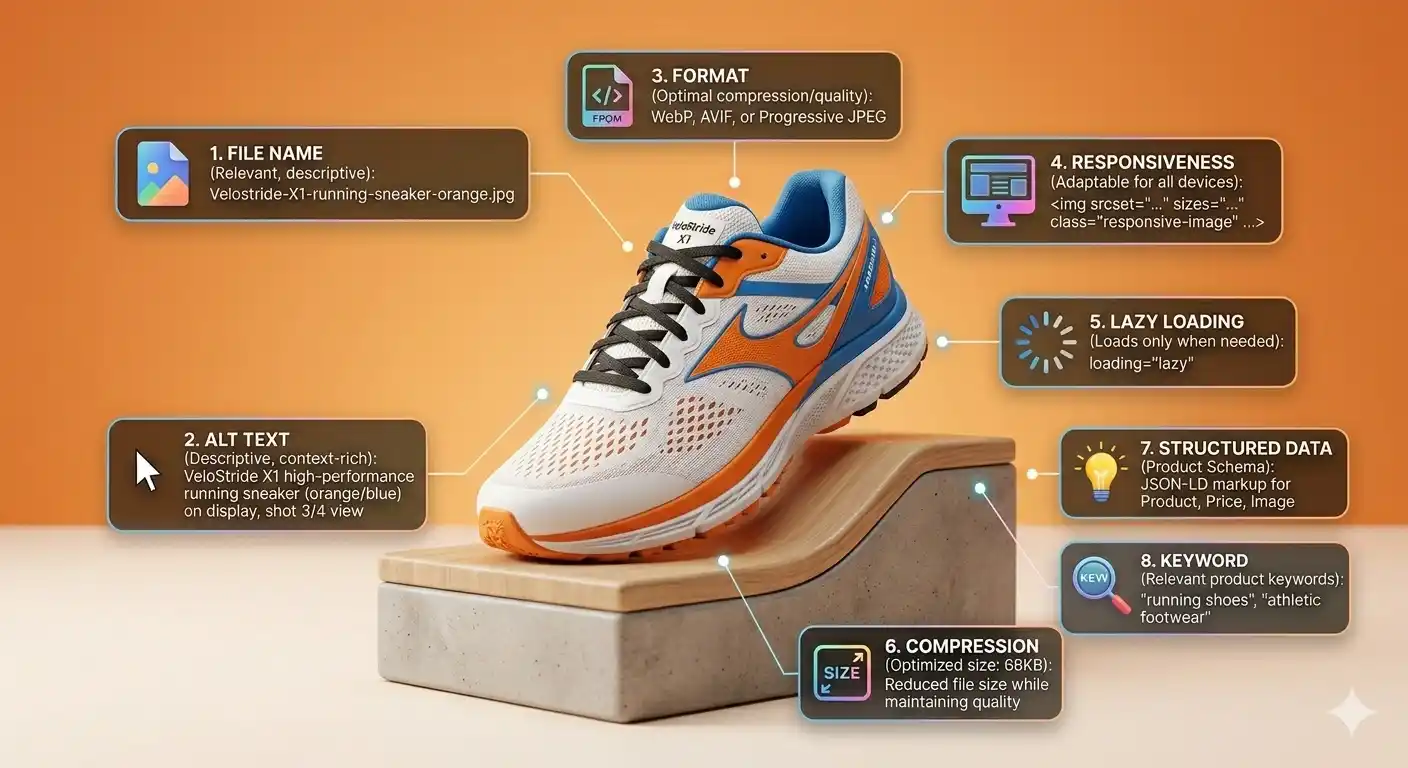
21. Use Image SEO Properly
In most of my other SEO articles, I don’t spend much time talking about image optimization. Honestly, based on what I have seen over the years, it usually does not create a huge SEO breakthrough on its own.
We have optimized images for many client websites, and in most cases, the clearest benefit was better page speed, especially when the files were compressed properly.
But eCommerce is a bit different because images are part of the buying process. People search for products, compare options visually, check design details, zoom into finishes, and in many cases, they also discover products through Google Images.
So even if image optimization is not the first thing I would fix on most websites, for eCommerce stores it is absolutely more important.
Here is the checklist you should follow:
22. Publish Buying Guides That Feed Commercial Pages
Yes, you still need a blog content strategy to support your commercial pages, generate relevant traffic, and help turn that traffic into leads or sales.
One of the biggest SEO mistakes I see in B2B eCommerce SEO is when brands publish blog posts that have no connection to the products, categories, or buying journey.
So when you build your B2B SEO content strategy, start with content that has a clear path to your money pages.
In most cases, that means covering BOFU topics that attract people who are already close to making a decision.
Below, I’ll show a chart with the content types that tend to work best for B2B eCommerce businesses based on relevance, conversion potential, and practical SEO value.
B2B eCommerce SEO Content Types
By conversion potential
Comparison articles
15
Listicles
30
Alternatives
10
Product reviews
45
Pro tip: Don’t just publish articles and hope people find their way to your product or category pages. Guide them there.
You can do that by placing strong internal links naturally inside the copy, but also by using well-designed banners, product blocks, comparison boxes, or callout sections between paragraphs.
23. Keep Thin or Out-Of-Stock Pages Under Control
In eCommerce, products go out of stock all the time. Sometimes it is temporary or just seasonal.
If a product is only temporarily out of stock, do not delete the page. Keep it live, keep it indexable, and make that status clear to users and search engines.
Show that the product is currently unavailable, mention when it may return if possible, and offer a useful next step such as a quote request, restock alert, or alternative products.
If the product is permanently discontinued and there is a very close replacement, then in most cases a 301 redirect to the most relevant alternative page makes sense.
If there is no suitable replacement, then it is often better to let the page return a proper 404 or 410 status instead of keeping a dead page indexed forever.
Pro tip: Don’t remove high-value pages too quickly. Check whether the page has backlinks, rankings, impressions, or any organic history before making changes.
24. Track Performance by Page Type, Not Just Total Traffic
A lot of people look at total organic traffic and immediately decide whether SEO is working or not. But total traffic alone doesn’t tell you much. You can grow traffic and still attract the wrong visitors (We call this traffic quality). That is why I strongly recommend tracking performance by page type, not just by overall numbers.
One best practice I recommend is segmenting your pages into clear groups from the start (It’s even easier in GSC, if you have clean URL structure).
There are many SEO tools, but Google Search Console (GSC) is still one of the best places to start because you can see clicks, impressions, and queries by URL.
If you want a cleaner reporting view, tools like Looker Studio or GA4 can help you build reports by page type so you don’t have to keep checking everything manually.
A Practical B2B eCommerce SEO Strategy You Can Build in Phases
If you are a complete beginner, I would honestly recommend hiring a B2B SEO agency or at least getting help from someone who has done this before. B2B eCommerce SEO has a lot of moving parts, and it is very easy to waste time on the wrong things.
But if you already have some SEO knowledge, maybe you have taken SEO courses, worked on a few projects, or just want a clearer expert-driven direction, then it helps to think in phases instead of trying to do everything at once.
B2B eCommerce SEO Strategy Roadmap
A practical growth roadmap for product-led B2B stores
Search & Revenue Audit
Map your current organic visibility, product category gaps, buyer intent, analytics setup, and revenue-driving pages.
Product, category & keyword gaps reviewedCategory & Product Page Strategy
Build stronger category pages, optimize product pages, improve internal linking, and connect commercial intent to real buyer actions.
Priority money pages selectedTechnical eCommerce Cleanup
Fix crawl waste, indexation issues, faceted navigation problems, duplicate pages, schema gaps, and site speed blockers.
Crawl efficiency improvedContent & Buying Journey Buildout
Create comparison pages, use-case content, industry pages, buying guides, FAQs, and product-led assets that support decision-making.
BOFU content roadmap createdAuthority & Conversion Growth
Build relevant links, improve trust signals, publish proof-driven content, and track rankings against qualified leads, sales, and revenue.
SEO tied to pipeline growthThe Bottom Line
In this B2B eCommerce SEO guide, I shared the tips, best practices, and techniques that I believe can really help, including a lot of insights you probably will not find repeated in the usual generic SEO articles.
At the same time, SEO is never one-size-fits-all. A lot depends on your current SEO state, your website structure, your market, your budget, SEO trends, your competition, and of course the way B2B search keeps changing. What works well for one store may need a very different approach for another.
But if this guide helped you realize that you need expert support, a clearer strategy, or simply a team that already understands the B2B SEO space, you can check out B2BSEO.io. We’re a specialized B2B SEO agency built to help companies grow through more practical, modern, and business-focused SEO.
Do B2B eCommerce Sites Need Blog Content?
In most cases, yes. Blog content can help you build topical authority, target more search terms, support your commercial pages, and attract buyers at different stages of the journey.
However, in very niche or highly local B2B markets, it can make more sense to focus harder on commercial pages, trust signals, and authority building first.
Is Duplicate Manufacturer Content Bad for SEO?
It is not always as disastrous as people make it sound, especially in B2B eCommerce where many stores use the same supplier descriptions. But that doesn’t mean it is ideal.
If your product pages look exactly like dozens of other websites, you give search engines very little reason to rank your version above the rest.
So I always recommend improving manufacturer copy with your own product knowledge, clearer explanations, stronger UX, practical details, FAQs, and anything else that makes the page more useful and more unique.
What Should You Prioritize First?
It depends a lot on your current situation, but if you are a newly launched B2B eCommerce website, I would usually prioritize clean UX, unique copywriting, and a strong website structure first.
In other words, make sure the site is clear, helpful, easy to navigate, and built on a solid foundation before you start pushing harder on authority building.
On the other hand, if you are a more established brand and already have some authority, but the website is messy, then I would usually start with a proper B2B SEO audit.
That helps you spot low-hanging fruit, technical issues, weak page structures, internal linking gaps, thin content, and other problems that may be holding back performance.
So yes, it always depends on the case, but in general, I would fix the foundation first, then build on top of it.
How to Make Pagination Crawl-Friendly?
Keep pagination simple, consistent, and easy for search engines to crawl. Make sure paginated pages use clean URLs, are internally linked properly, and are not blocked by noindex tags or robots.txt by mistake.
Also, don’t rely only on filters or JavaScript to load deeper product listings. If search engines cannot reach those pages properly, they may miss a large part of your catalog.
Should You Do SEO for Google Merchant Center?
Yes, absolutely, but not in the traditional sense.
You don’t “rank” Merchant Center the same way you rank normal organic pages, but the product data you feed into it still needs serious optimization.
Your titles, descriptions, images, attributes, pricing, availability, and product categorization all affect how well your products perform. So if you care about visibility in Google Shopping and other product-driven search surfaces, then yes, Merchant Center optimization is very important.
Is SEO Important for eCommerce?
Yes, and honestly, it is one of the most important growth channels for eCommerce.
Paid ads can work, but the moment you stop paying, the traffic slows down. SEO is different; it helps your products, categories, and content keep generating traffic over time.
Why Invest in SEO Services for eCommerce?
Because eCommerce SEO is rarely just about adding keywords to a few pages.
You are dealing with product pages, category pages, technical SEO, internal linking, crawl issues, duplicate content, out-of-stock products, faceted navigation, content strategy, and conversion paths all at once.
A good eCommerce SEO service helps you connect all of that properly, so your store doesn’t just get more traffic, but gets traffic that can turn into sales, leads, and long-term growth.
How to Choose an eCommerce SEO Agency?
There are a lot of things worth looking at here. I would pay attention to the agency’s reputation, reviews, case studies, methodology, reporting style, process, and the way they talk about SEO trends.
You need a team that sounds realistic, understands eCommerce deeply, and doesn’t hide behind blurry promises or BS SEO talk.
The best agencies usually make it clear how they think, how they work, and what they would prioritize for a store like yours.
I also have a dedicated guide on how to hire a B2B SEO agency, so if you want a deeper breakdown, that is a good place to start.
Does YouTube Video Help SEOceCommerce?
Yes, they can, especially for AI search engines (E.g., ChatGPT, they’re great). Not always in a direct ranking sense, but they can still support eCommerce SEO in a few smart ways.
As I already said in one of my strategies, videos can improve product pages, increase time on page, help buyers understand the product faster, and create extra visibility through YouTube itself, which is a search engine on its own.
In some cases, strong product videos can also improve trust and conversion rates, which is never a bad thing for SEO-supported traffic.
Written by
Ashot NanayanSEO Strategist
Ashot Nanayan is an SEO strategist and the founder of B2BSEO.io. He helps B2B companies build search systems that do more than rank pages. His approach connects Google visibility, AI search presence, content depth, authority, and buyer intent, so brands appear where serious decisions start.